Spanish grammar · A1 to A2 · Updated
Preterite vs imperfect in Spanish
The preterite is what happened. The imperfect is what was going on around it. A story in Spanish runs on both at once: the imperfect paints the scene, the weather and the habits, and then the preterite arrives and something changes. English hides all of this inside one simple past, which is why the choice feels arbitrary at first and then stops feeling arbitrary.
The short answer
The preterite is what happened: one finished event, however long it lasted. The imperfect is what was going on around it: the scene, the weather, the habit, the age, the time of day. A story runs on both at once, and the preterite is what moves it forward.
How to remember it
Imperfect paints, preterite moves
| Paints | the background: what was going on, what it was like | Llovía |
|---|---|---|
| Moves | the event: what happened, and then what happened next | Llovió |
| Used to | a habit in the past always takes the imperfect | Iba todos los días |
| Suddenly | anything that interrupts takes the preterite | De repente entró |
| Clock, age, weather | the scenery of a story, all imperfect | Eran las tres |
The forms
The two pasts, side by side
| preterite | imperfect | |
|---|---|---|
| hablar (yo) | hablé | hablaba |
| comer (yo) | comí | comía |
| vivir (yo) | viví | vivía |
| ser (yo) | fui | era |
| ir (yo) | fui | iba |
| ver (yo) | vi | veía |
| tener (yo) | tuve | tenía |
| estar (yo) | estuve | estaba |
20 sentences that show the difference
Everyday Spanish, the kind you would actually say. The label under each one says which part of the rule it shows.
Ayer comí en casa.
Yesterday I ate at home.
One finished event
De niño comía en casa.
As a child I used to eat at home.
A habit
Vivió veinte años en Madrid.
He lived in Madrid for twenty years.
Long, but finished
Vivía en Madrid cuando pasó.
He was living in Madrid when it happened.
The scene
Eran las tres.
It was three o clock.
Clock time
Tenía diez años.
She was ten years old.
Age
Llovía y hacía frío.
It was raining and it was cold.
Weather
De repente sonó el teléfono.
Suddenly the phone rang.
Interruption
Leía cuando entró mi hermano.
I was reading when my brother came in.
Both at once
Todos los veranos íbamos al pueblo.
Every summer we went to the village.
Repeated habit
El verano pasado fuimos al pueblo.
Last summer we went to the village.
One trip
Estaba cansado, así que me acosté.
I was tired, so I went to bed.
State, then event
La conocí en 2019.
I met her in 2019.
Conocer changes meaning
La conocía desde 2019.
I had known her since 2019.
Conocer changes meaning
Supe la verdad ese día.
I found out the truth that day.
Saber changes meaning
Sabía la verdad.
I knew the truth.
Saber changes meaning
No quiso venir.
He refused to come.
Querer changes meaning
No quería venir.
He did not want to come.
Querer changes meaning
Empezó a llover a las cinco.
It started raining at five.
A start is an event
Mientras cenábamos, llamaron.
While we were having dinner, they called.
Mientras takes the imperfect
Where English gets in the way
English draws this line with the shape of the verb: he was singing against he sang. Spanish draws it with two different tenses, cantaba against cantó, and does not need estaba cantando to do it. So resist the urge to build a progressive every time English has one. Mientras Antonio cantaba is the natural Spanish, and it already contains the idea of was singing. The trap runs the other way too: English often uses a plain past for background, as in the fire burned, and there Spanish still needs the imperfect, el fuego ardía.
The mistake to avoid
The classic error is putting the background in the preterite: ✗ Mientras el fuego ardió, llegó un muchacho → ✓ Mientras el fuego ardía, llegó un muchacho. The mirror error is putting the action in the imperfect: ✗ Cuando terminaba la canción, todos aplaudían, which turns a single evening into a nightly routine. The other thing to watch is the accent, because it is the only difference between two tenses: canto is I sing, cantó is he sang. Lose the tilde and you lose the meaning.
The cases that break the rule
Vivió veinte años allí
Twenty years is long and it still takes the preterite. Length has nothing to do with it: the block is closed, so it is one event. The shortcut "long means imperfect" fails here.
Conocí, supe, quise
Four verbs change meaning between the two. Conocer: knew against met. Saber: knew against found out. Querer: wanted against tried. No querer: did not want against refused. Poder: was able against managed.
Fui
Ser and ir share the whole preterite. Fui médico is I was a doctor, fui a Madrid is I went to Madrid. Only what follows tells you which.
Era la una
The clock always takes the imperfect in a story, however precise. Fueron las tres would mean the hour itself arrived, which is not what anyone says.
Iba a salir
The imperfect of ir plus a is what was going to happen and did not. It is a whole tense in disguise, and it is how Spanish says "I was about to".
Hubo and había
Había is there was, describing. Hubo is there was, as an event that took place: hubo un accidente. Both are hay in the present, and the difference only shows in the past.
Preterite vs imperfect exercises
8 sentences to fill in. Type your answer and check it, or read them straight through with the answers showing. Accents count here, the way they count in the language.
-
Ayer (comer, yo) ___ en un restaurante nuevo.
Yesterday I ate at a new restaurant.
comí · Preterite, because ayer closes the block. One finished meal on one finished day.
-
Cuando (ser, yo) ___ niño, jugaba en la calle.
When I was a child, I used to play in the street.
era · Imperfect, because childhood is the scene and not an event. Notice that jugaba is imperfect too, for the habit.
-
Leía tranquilamente cuando (sonar) ___ el teléfono.
I was reading quietly when the phone rang.
sonó · Preterite, because the phone interrupts. What is interrupted stays in the imperfect.
-
(Ser) ___ las tres de la tarde y hacía calor.
It was three in the afternoon and it was hot.
Eran · Imperfect. The clock and the weather are scenery, and scenery never takes the preterite.
-
El verano pasado (ir, nosotros) ___ a Galicia.
Last summer we went to Galicia.
fuimos · Preterite, because it is one trip in one closed summer. Todos los veranos íbamos would be the habit.
-
La (conocer, yo) ___ en una fiesta en 2019.
I met her at a party in 2019.
conocí · Preterite of conocer means met, the moment it started. La conocía would mean I already knew her.
-
Todos los domingos (visitar, nosotros) ___ a la abuela.
Every Sunday we visited grandmother.
visitábamos · Imperfect, because todos los domingos marks a habit. English "we visited" hides this, Spanish does not.
-
Mientras (cenar, nosotros) ___, llamaron a la puerta.
While we were having dinner, someone knocked at the door.
cenábamos · Imperfect, because mientras sets the scene. The knock is preterite, because it is what happened.
More exercises, from Don Quixote
8 more, these ones straight out of the course: the inn, the windmills, Rocinante and the road. Same rule, older Spanish.
-
Todas las noches don Quijote (leer) ___ libros de caballerías.
Every night Don Quixote read books of chivalry.
leía · Imperfect, because "every night" makes it a habit and a habit has no end.
-
Aquella noche (salir) ___ de casa sin decir nada.
That night he left the house without saying anything.
salió · Preterite, because it happened once and it finished.
-
(Hacer) ___ mucho calor cuando llegaron a la venta.
It was very hot when they reached the inn.
Hacía · Imperfect, because the weather is the scene around the event, not the event.
-
Mientras cenaban, (entrar) ___ el barbero.
While they were having supper, the barber came in.
entró · Preterite, because it is the thing that arrives and cuts across what was going on.
-
De joven, Alonso Quijano (ser) ___ un hombre tranquilo.
As a young man, Alonso Quijano was a quiet man.
era · Imperfect, because it describes how he was for years, with no start and no end in view.
-
El cura y el barbero (quemar) ___ los libros aquella mañana.
The priest and the barber burned the books that morning.
quemaron · Preterite, because the burning happened and was over.
-
(Ser) ___ las tres de la tarde cuando vieron los molinos.
It was three in the afternoon when they saw the windmills.
Eran · Imperfect. Telling the time in the past is always imperfect, with no exceptions.
-
Don Quijote (ver) ___ treinta molinos en el campo.
Don Quixote saw thirty windmills in the field.
vio · Preterite, because the moment he catches sight of them is a single point in the story.
Common questions
How do I choose between the preterite and the imperfect?
Ask whether the verb moves the story forward or sets the scene. Events that happened and finished take the preterite. Background, habits, descriptions, age, weather and the time of day take the imperfect.
Which words signal each tense?
Ayer, anoche, de repente, una vez and el año pasado pull the preterite. Siempre, todos los días, mientras, cada verano and normalmente pull the imperfect. They are hints rather than rules, but they are reliable hints.
Can the same verb take both?
Yes, and the meaning changes. Sabía means I knew, supe means I found out. Conocía means I knew somebody, conocí means I met them. Quería means I wanted, quise means I tried.
How do I say used to in Spanish?
The imperfect on its own: iba al colegio andando, I used to walk to school. Spanish does not need an extra word for it, and adding solía is only for when you want to stress the habit. Anything that was a routine rather than one event goes in the imperfect.
Which past tense do I use to tell a story?
Both, doing different jobs. The imperfect paints the background that was already there: the weather, the time, what people looked like, what was going on. The preterite gives the events that move the story forward. Era de noche y llovía is the set, llamaron a la puerta is what happened.
Which tense goes with age and the time?
The imperfect, both of them: tenía diez años, eran las tres. Age and clock time describe the state the world was in, not something that happened, so they never take the preterite unless the age itself was the event: cumplió diez años.
Which verbs change meaning between the two?
Four do it clearly. Conocía is knew someone, conocí is met them. Sabía is knew a fact, supe is found out. Quería is wanted, quise is tried, and no quise is refused. Podía is was able, pude is managed to.
Why is it era and not fue?
Because ser in the imperfect describes what something was like for a stretch of time: era alto, era mi profesor. Fue closes the whole thing off and is used for a finished period or a verdict on it: fue un buen año. Both are correct Spanish, and the choice says whether you are describing or summing up.
The things to remember
- Ask what the sentence is doing. Painting the scene is the imperfect; moving the story on is the preterite.
- How long it lasted does not matter. Vivió veinte años allí is preterite because the block is closed.
- Clock, age, weather and description are imperfect almost without exception.
- Interruptions are preterite and what they interrupt is imperfect: leía cuando entró.
- Conocer, saber, querer and poder change meaning between the two. Learn those four as pairs.
The same rule in Don Quixote
Real lines from the course, not invented examples. Each one is the sentence the lesson uses to introduce the point.
Mientras el fuego ardía, llegó un muchacho.
While the fire was burning, a lad arrived.
Aquella mañana don Quijote volvió hacia su pueblo.
That morning Don Quixote headed back towards his village.
Rocinante era viejo y andaba despacio.
Rocinante was old and walked slowly.
Los cabreros eran pobres.
The goatherds were poor.
En el pueblo vivía un estudiante rico y muy listo.
In the village there lived a rich and very clever student.
The book this comes from
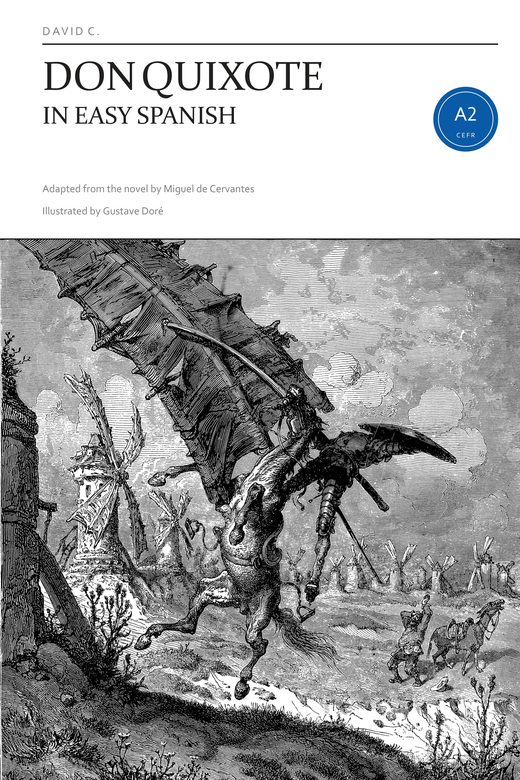
Don Quixote in Easy Spanish: the whole novel retold in Spanish you can actually read, in 58 short episodes, with the hard words glossed in the margin. It is where every Don Quixote sentence on this page comes from.
In EPUB and PDF, with a second novel in the same Spanish. See the books.
Where the course teaches this
5 lessons build it up, each one inside a chapter of the story rather than in the abstract. Free to read, with the vocabulary, the audio and the exercises.
- Preterite and imperfect: background and actionLesson 24Antonio’s song
- The preterite: regular verbsLesson 15The boy tied to the oak tree
- The imperfect, and when it is not the preteriteLesson 17The most beautiful woman in the world
- The imperfect: the world as it used to beLesson 23The speech on the Golden Age
- Telling a story: preterite and imperfectLesson 25The student who died of love
Next to this one
The points that sit closest to this one, and that a student usually meets around the same time.