Spanish grammar · B1 to B2 · Updated
Spanish si clauses and the three conditionals
Three patterns and no more. A real condition: si plus the present, then the future. An unreal present one: si plus the imperfect subjunctive, then the conditional. An unreal past one: si plus the pluperfect subjunctive, then the conditional perfect. The rule that catches everybody is that si never takes the present subjunctive.
The short answer
Spanish si clauses come in three shapes. Real: si llueve, no salgo, present and present. Unreal now: si lloviera, no saldría, imperfect subjunctive and conditional. Unreal in the past: si hubiera llovido, no habría salido. The one rule that never breaks is that si is never followed by the present subjunctive.
How to remember it
Three types, and si never takes the present subjunctive
| Type 1, real | si plus present, then present or future or an order | Si llueve, no salgo |
|---|---|---|
| Type 2, unreal now | si plus imperfect subjunctive, then conditional | Si lloviera, no saldría |
| Type 3, unreal past | si plus pluperfect subjunctive, then conditional perfect | Si hubiera llovido, no habría salido |
| Never | si llueva does not exist. Not once, in any of the three | ✗ Si llueva |
| Either order | the si half can go first or second, only the comma moves | No salgo si llueve |
The forms
The three types side by side
| type | the si half | the other half |
|---|---|---|
| 1, it may well happen | si tengo tiempo | te llamo |
| 1, with a future | si tengo tiempo | te llamaré |
| 1, with an order | si tienes tiempo | llámame |
| 2, it is not the case | si tuviera tiempo | te llamaría |
| 3, it did not happen | si hubiera tenido tiempo | te habría llamado |
| 3, the other conditional | si hubiera tenido tiempo | te hubiera llamado |
20 sentences that show the difference
Everyday Spanish, the kind you would actually say. The label under each one says which part of the rule it shows.
Si llueve, no salgo.
If it rains, I am not going out.
Type 1
Si tengo tiempo, te llamo.
If I have time, I will call you.
Type 1
Si vienes, te enseño la casa.
If you come, I will show you the house.
Type 1
Si me llamas, te lo cuento.
If you call me, I will tell you.
Type 1
Si terminas pronto, llámame.
If you finish early, call me.
Type 1 with an order
Si quieres, vamos mañana.
If you like, we can go tomorrow.
Type 1, an offer
Si tuviera dinero, viajaría.
If I had money, I would travel.
Type 2
Si fuera tú, no lo haría.
If I were you, I would not do it.
Type 2
Si pudiera, te ayudaría.
If I could, I would help you.
Type 2
Si supiera la respuesta, te la diría.
If I knew the answer, I would tell you.
Type 2
Si viviera aquí, iría andando.
If I lived here, I would walk.
Type 2
Si hubiera estudiado, habría aprobado.
If I had studied, I would have passed.
Type 3
Si me lo hubieras dicho, habría ido.
If you had told me, I would have gone.
Type 3
Si no hubiera llovido, habríamos salido.
If it had not rained, we would have gone out.
Type 3
Si lo hubiera sabido, no vengo.
If I had known, I would not have come.
Type 3, spoken shortcut
No salgo si llueve.
I am not going out if it rains.
The si half second
Como si nada.
As if nothing had happened.
Como si always unreal
Habla como si lo supiera todo.
He talks as if he knew everything.
Como si plus subjunctive
Por si acaso.
Just in case.
Set phrase
Si hubiera llovido, hubiéramos salido.
If it had rained, we would have gone out.
Hubiera for habría, common
Where English gets in the way
English builds the same three types and marks them by moving the tense back one step: if it is, if it was, if it had been. Spanish moves the mood instead of the tense, which is why the English past tense is a trap here. If that was true becomes si aquello fuera verdad, not ✗ si aquello era verdad and certainly not ✗ si aquello fue verdad. The one place English will help you is if I were you, the last surviving English subjunctive, which is doing exactly what the whole Spanish type 2 does. The place English will actively hurt you is that it allows would inside the if half in casual speech. Spanish never does, and it is the single most recognisable mistake an English speaker makes in this construction.
The mistake to avoid
One, and it is fatal: putting the conditional after si. ✗ Si tendría seis reales, se los daría → ✓ Si tuviera seis reales, se los daría. Two. Putting the future after si. ✗ Si bajará a la cueva → ✓ Si baja a la cueva. Three. Using the plain imperfect indicative because English says was. ✗ Si aquello era verdad, no empeñaría la ropa → ✓ Si aquello fuera verdad. Four. Mixing the halves of two different types: ✗ Si hubiera tenido seis reales, se los daría is a jumble unless you really mean the consequence is still open today.
The cases that break the rule
Si llueva
The single most common mistake, and it is never right. Si takes the present indicative or the imperfect subjunctive, never the present subjunctive, whatever the sentence is doing.
Si hubiera / si hubiese
Both endings are correct everywhere and mean exactly the same. Hubiera is far commoner in speech, hubiese is more written. The same goes for tuviera and tuviese, fuera and fuese.
Habría or hubiera in type 3
Both are accepted in the second half: habría ido and hubiera ido. Only the first half is fixed. Spanish is relaxed about this and textbooks are not.
Si lo sé, no vengo
Spoken Spanish flattens type 3 into two presents, and it is completely normal. It means "if I had known, I would not have come". Written down it looks wrong; said out loud it is what people say.
Como si
Como si always takes the imperfect or pluperfect subjunctive, never the present, because it always describes something that is not the case. Como si fuera fácil, as if it were easy.
Si quieres, vamos
A type 1 that is really an offer, not a condition. Spanish uses it constantly to soften a suggestion, where English would say "we could go if you like".
Spanish si clause exercises
8 sentences to fill in. Type your answer and check it, or read them straight through with the answers showing. Accents count here, the way they count in the language.
-
Si (llover) ___ mañana, no salimos.
If it rains tomorrow, we are not going out.
llueve · Type 1, present indicative. Si llueva does not exist, in any type.
-
Si (tener, yo) ___ tiempo, te llamo esta tarde.
If I have time, I will call you this afternoon.
tengo · Type 1, because it may well happen. The other half can be present, future or an order.
-
Si (ser, yo) ___ tú, no diría nada.
If I were you, I would not say anything.
fuera · Type 2, imperfect subjunctive, because I am not you. Fuese is equally correct.
-
Si (poder, nosotros) ___, te ayudaríamos.
If we could, we would help you.
pudiéramos · Type 2. The conditional ayudaríamos is in the other half, never after si.
-
Si (estudiar, tú) ___ más, habrías aprobado.
If you had studied more, you would have passed.
hubieras estudiado · Type 3, pluperfect subjunctive. The exam is over, so nothing can change now.
-
Si me lo (decir, tú) ___, habría ido contigo.
If you had told me, I would have gone with you.
hubieras dicho · Type 3 again. Hubieses dicho is just as correct and sounds more written.
-
Habla como si lo (saber) ___ todo.
He talks as if he knew everything.
supiera · Como si always takes the imperfect subjunctive, because it always describes what is not so.
-
No salgo si (hacer) ___ frío.
I do not go out if it is cold.
hace · Type 1 with the si half second. Only the comma disappears; nothing else changes.
More exercises, from Don Quixote
8 more, these ones straight out of the course: the inn, the windmills, Rocinante and the road. Same rule, older Spanish.
-
Si (llover) ___ mañana, no saldremos.
If it rains tomorrow, we will not go out.
llueve · A real possibility takes the plain present after si, even about tomorrow. Never the future, and never the present subjunctive.
-
Si tú estudias, (aprobar) ___.
If you study, you will pass.
aprobarás · Present after si, future in the other half. This is the everyday pattern.
-
Si yo (ser) ___ rico, compraría una ínsula.
If I were rich, I would buy an island.
fuera or fuese · Unreal present: imperfect subjunctive after si, conditional after the comma.
-
Si tuviera un caballo, (salir, yo) ___ al campo.
If I had a horse, I would ride out.
saldría · The conditional never goes inside the si half. Si saldría is the one mistake to avoid.
-
Si Sancho (querer) ___, sería gobernador mañana.
If Sancho wanted to, he would be governor tomorrow.
quisiera or quisiese · Still unreal, so still imperfect subjunctive, even though the other half looks at the future.
-
Si Sancho (haber) ___ callado, no habría pasado nada.
If Sancho had kept quiet, nothing would have happened.
hubiera or hubiese · The past you cannot change: hubiera plus participle, and habría plus participle after it.
-
Si me (escuchar, tú) ___ ayer, ahora estarías bien.
If you had listened to me yesterday, you would be fine now.
hubieras escuchado or hubieses escuchado · The condition is in the past and the result is in the present, so the halves are in different tenses.
-
Yo que tú, (hablar) ___ con el cura.
If I were you, I would talk to the priest.
hablaría · Yo que tú replaces the whole si half, and what follows is still the conditional.
Common questions
What are the three si patterns?
Real: si plus the present, then the present or the future. Unreal present: si plus the imperfect subjunctive, then the conditional. Unreal past: si plus the pluperfect subjunctive, then the conditional perfect.
Can si take the present subjunctive?
Never. Si tenga is wrong in every register. If the condition is real say si tengo, and if it is unreal say si tuviera. This is the single most common mistake in the whole area.
Does the si half have to come first?
No. Si tuviera dinero, viajaría and viajaría si tuviera dinero say the same thing. The comma only appears when the si half comes first.
How do I say if I had known in Spanish?
Si lo hubiera sabido, and the other half takes habría: si lo hubiera sabido, te habría llamado. This is the pattern for regret about the past, and in speech many people use hubiera in both halves, which is accepted.
What is the third conditional in Spanish?
The one about a past that did not happen: si hubiera estudiado, habría aprobado. The si half takes the pluperfect subjunctive and the other half takes the conditional perfect. It is the pattern for saying what would have happened.
Can si mean whether?
Yes, and then everything changes. That si opens an indirect question and takes the indicative, including the future: no sé si vendrá. It is a different si from the one that sets a condition, and it is why no sé si vendrá is right while si vendrá, te aviso is wrong.
What is the difference between si and sí?
Si without an accent is if. Sí with an accent is yes, and it is also the emphatic one in sí que lo sé, I do know. The accent is doing real work here and leaving it out changes the sentence.
Is si siempre or cuando the right word for a habit?
Both work and they say slightly different things. Si llueve, no salgo presents it as a condition. Cuando llueve, no salgo presents it as a routine that repeats. Neither takes the subjunctive, because a habit is a fact.
The things to remember
- Si is never followed by the present subjunctive. That rule has no exceptions.
- Type 1 is present and present. Type 2 is imperfect subjunctive and conditional. Type 3 stacks haber on both.
- Si fuera tú, not si sería tú. The conditional lives in the other half of the sentence.
- Hubiera and hubiese are interchangeable. So are tuviera and tuviese.
- Como si always takes the imperfect subjunctive, whatever tense the rest of the sentence is in.
The same rule in Don Quixote
Real lines from the course, not invented examples. Each one is the sentence the lesson uses to introduce the point.
Si aquel palacio estuviera en la superficie, sería la maravilla de España.
If that palace stood above ground, it would be the wonder of Spain.
Si salimos de noche, nadie nos ve.
If we leave by night, nobody sees us.
Si hubiera probado la olla, habría estado enfermo una semana.
If he had tasted the stew, he would have been ill for a week.
The book this comes from
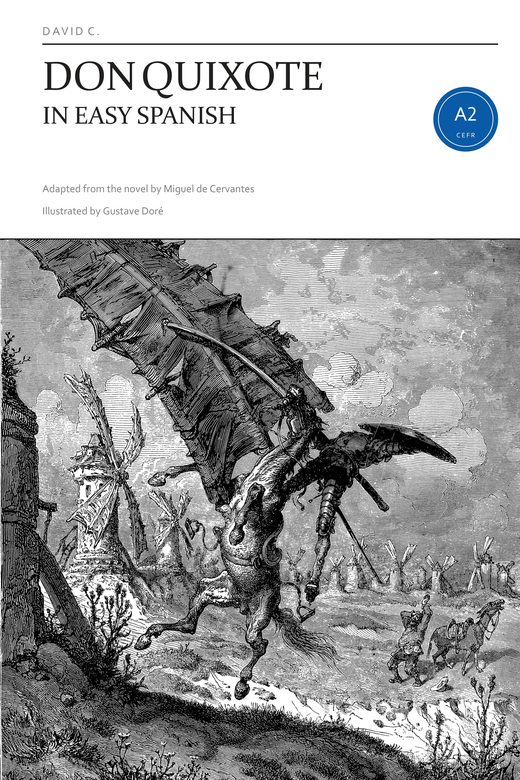
Don Quixote in Easy Spanish: the whole novel retold in Spanish you can actually read, in 58 short episodes, with the hard words glossed in the margin. It is where every Don Quixote sentence on this page comes from.
In EPUB and PDF, with a second novel in the same Spanish. See the books.
Where the course teaches this
3 lessons build it up, each one inside a chapter of the story rather than in the abstract. Free to read, with the vocabulary, the audio and the exercises.
- Si tuviera seis reales, se los daríaLesson 70Dulcinea Asks for Six Reales
- Si with the present: the condition that really can happenLesson 52The Escape by Sea
- If he had eaten, he would have been illLesson 80The Governor Goes Hungry
Next to this one
The points that sit closest to this one, and that a student usually meets around the same time.