Level B1 · Chapter 52
The Escape by Sea
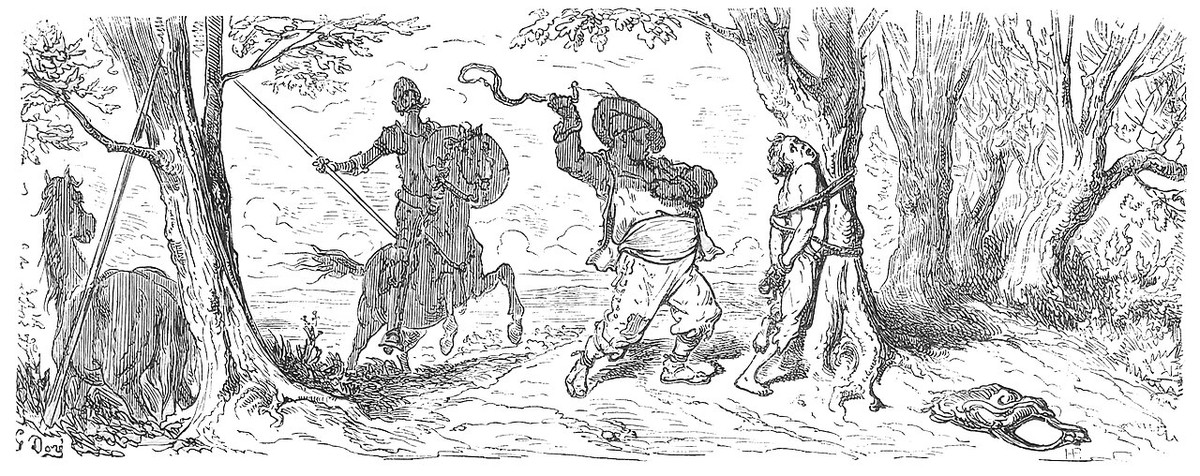
Zoraida’s gold buys a boat and hires oarsmen. On the night of the escape almost everything goes to plan, and what does not go to plan is her father.
What you will learn
- Talk about what happens if a real condition is met.
- Use si with the present and never with the future.
- Chain conditions together to lay out a whole plan.
Before you read
The renegade lays out the plan in sentences that begin with si. Look hard at the verb immediately after it. In English you would expect a future in at least half of them, and Spanish will not allow one there under any circumstances. The rule is short and it never bends, which makes this one of the few pieces of Spanish grammar you can learn in a minute and never get wrong again.The story in easy Spanish
El plan tardó meses en estar listo, porque cada paso podía costarles la vida.
The plan took months to be ready, because every step could cost them their lives.
Con el oro de Zoraida, el renegado compró una barca pequeña y ligera.
With Zoraida’s gold, the renegade bought a small, light boat.
Después buscó remeros cristianos en el puerto y les repartió parte del dinero.
Then he looked for Christian oarsmen at the harbour and shared out part of the money among them.
«Si salimos de noche, nadie nos ve», decía el renegado en voz baja.
"If we leave by night, nobody sees us," the renegade would say in a low voice.
«Si el viento nos ayuda, en 3 días estamos en España».
"If the wind helps us, we are in Spain in three days."
«Si nos descubren, no hay segunda oportunidad para ninguno de nosotros».
"If they discover us, there is no second chance for any of us."
Ruy Pérez repetía aquellas frases por dentro cada noche antes de dormir.
Ruy Pérez repeated those sentences to himself every night before sleeping.
La noche elegida, él y sus hombres entraron en el jardín de Agi Morato.
On the chosen night, he and his men went into Agi Morato’s garden.
Zoraida los esperaba junto a la puerta, con una caja de joyas entre los brazos.
Zoraida was waiting for them by the door, with a box of jewels in her arms.
Llevaba la cabeza cubierta y no dijo una sola palabra.
Her head was covered and she did not say a single word.
Pero el padre se despertó, salió al jardín y preguntó quién andaba allí.
But her father woke, came out into the garden and asked who was there.
No podían dejarlo suelto, porque si daba la alarma los cogían a todos.
They could not leave him loose, because if he raised the alarm they would all be caught.
Se lo llevaron con ellos, atado y en silencio, hasta la orilla del mar.
They took him with them, bound and silent, down to the shore.
Zoraida no se atrevía a mirarlo y lloraba con la cara tapada.
Zoraida did not dare look at him and wept with her face covered.
La barca salió del puerto sin que nadie la viera desde las murallas.
The boat left the harbour without anyone seeing it from the walls.
Al amanecer, ya lejos de la costa, buscaron un cabo desierto y pararon.
At dawn, well away from the coast, they looked for a deserted headland and stopped.
Allí dejaron al padre en tierra, con su dinero y sin su hija.
There they left the father ashore, with his money and without his daughter.
Él les gritó desde la orilla que volvieran, y luego les gritó cosas peores.
He shouted at them from the shore to come back, and then shouted worse things at them.
Zoraida lo oyó todo y siguió sin levantar la cabeza del fondo de la barca.
Zoraida heard all of it and kept her head down in the bottom of the boat.
Navegaron 4 días con muy poca comida y con el miedo puesto encima.
They sailed for four days with very little food and with fear sitting on top of them.
Un barco francés los alcanzó por el camino y les quitó casi todo.
A French ship caught up with them along the way and took almost everything.
Les dejaron la barca y la vida, que en aquel mar ya era mucho.
They left them the boat and their lives, which in that sea was already a great deal.
Cuando por fin vieron la costa española, ninguno se atrevió a gritar de alegría.
When at last they sighted the Spanish coast, not one of them dared shout for joy.
Un hombre que pescaba en la playa les preguntó quiénes eran.
A man fishing on the beach asked them who they were.
Ruy Pérez respondió que eran cristianos que volvían a su casa.
Ruy Pérez answered that they were Christians coming home.
Y esa vez nadie le pidió más pruebas.
And that time nobody asked him for further proof.
Vocabulary
The sea and the boat
- la barca
- the small boat
- el remero
- the oarsman
- la galera
- the galley
- el puerto
- the harbour
- la orilla
- the shore
- la costa
- the coast
- navegar
- to sail
- el viento
- the wind
The escape
- la fuga
- the escape
- escapar
- to escape
- la alarma
- the alarm
- las joyas
- the jewels
- atado
- tied up
- encadenado
- in chains
- el secreto
- the secret
- engañar
- to deceive
What was left behind
- el cautivo
- the captive
- el combate
- the fighting
- el pañuelo
- the cloth
- la moneda
- the coin
- la fortuna
- a fortune
- el pozo
- the well
- la esclava
- the slave woman
- vecino
- neighbouring
Si with the present: the condition that really can happen
Si salimos de noche, nadie nos ve.
Si el viento nos ayuda, en 3 días estamos en España.
Si nos descubren, no hay segunda oportunidad.
Spanish has three ways of building an if sentence, and they are numbered by how likely the condition is. This lesson is the first and by far the most useful: the condition is real, it may well happen, and the plan depends on it.
1. The shape
After si, the present indicative. In the other half, one of three things.
| result half | example | when you use it |
|---|---|---|
| present | Si salimos de noche, nadie nos ve. | a general truth or an immediate consequence |
| future | Si salimos de noche, nadie nos verá. | a prediction about one occasion |
| imperative | Si te descubren, corre hacia la barca. | an instruction |
Notice that the two present-tense versions of that first sentence are both correct and mean slightly different things. The present result feels like a rule of the world, the way Spanish says si llueve, no salgo. The future result is about this particular night. Spanish speakers use the present far more than English speakers expect.
2. The one absolute prohibition
Never a future tense directly after si. Never. This is the rule that English speakers break, because English does allow it in some registers and because the meaning is plainly about the future.
| ✗ wrong | ✓ right |
|---|---|
| si saldremos de noche | si salimos de noche |
| si el viento nos ayudará | si el viento nos ayuda |
| si nos descubrirán | si nos descubren |
There is a second prohibition that matters just as much and is easier to forget: no present subjunctive after si either. ✗ si salgamos de noche is not Spanish. The subjunctive turns up with cuando and en cuanto pointing at the future, which is lesson 60, but si never takes it.
3. Word order and the comma
Either half can come first, and the meaning does not change.
| order | example |
|---|---|
| condition first, comma | Si nos descubren, no hay segunda oportunidad. |
| result first, no comma | No hay segunda oportunidad si nos descubren. |
Putting the condition first is what a person laying out a plan does, because it makes the listener hold the situation in mind before hearing the consequence. The renegade does it three times in a row, and the repetition is what turns three sentences into a plan.
4. Si is not sí and it is not whether
Two small confusions worth clearing now. Si with no accent is if. Sí with an accent is yes. And the si you met last lesson in preguntó si era hombre de bien is a different si altogether, the one that means whether. That one is not a condition and it is not covered by any rule in this lesson: it can be followed by anything, including a future.
The four escapes Cervantes did not manage
Cervantes tried to escape from Algiers four times in five years. The first attempt collapsed when the guide who was leading his group overland abandoned them on the second day. The second involved a boat that was to pick up a party of Christians hidden in a cave outside the city. Some of them had been in that cave for months, fed at night by a gardener, and the whole plan was betrayed by a man called El Dorador for a single gold escudo. The third was a letter carried to the Spanish governor of Oran, whose messenger was caught and impaled. The fourth was another boat, and another informer.
What is extraordinary is not the failures but what happened afterwards. Every time, Cervantes told his captors that he alone had planned it and that the others had merely obeyed him. He said this knowing exactly what was done to ringleaders in Algiers, which was public and slow. He was threatened, put in chains, and moved to the ruler’s own prison, and he was never executed. Historians have argued about why for four hundred years and there is still no agreement.
Now read this lesson again. The boat is bought, the oarsmen are hired, the wind cooperates, the party reaches the Spanish coast, and the man on the beach believes them. It is the only escape from Algiers in all of Cervantes’ writing that works, and he gives it to somebody else. The renegade is not the traitor. The Frenchmen who rob them leave them alive. Every place where his own life broke, this story holds.
There is one thing he does not let off. The father is real, he wakes up, and they take him. Zoraida hears him screaming from the shore and does not lift her head. Cervantes could have written that scene without the father in it, and he refused to.
Cervantes in the original · «Iba Zoraida, en tanto que se navegaba…»
Iba Zoraida, en tanto que se navegaba, puesta la cabeza entre mis manos, por no ver a su padre
Zoraida went, while the sailing went on, with her head between my hands, so as not to see her father.
This is the whole escape in one image, and every part of the sentence is doing something. En tanto que se navegaba is the old form of mientras, the connector you learned in lesson 48, and it puts two things in the same moment: the boat moving and the woman not looking. Then se navegaba, an impersonal passive, sailing was being done. There is no subject. Nobody in particular is rowing, the sea is simply being crossed, and the effect is to push the mechanics of the escape into the background so that only she is in focus. Then the physical detail, puesta la cabeza entre mis manos, which tells you that Ruy Pérez is holding her head, that this is the first time he has touched her, and that the gesture is not romantic. And finally the reason, five words at the very end where Spanish likes to put the thing that hurts: por no ver a su padre. She is not hiding from the guards. She is hiding from a man screaming her name on a beach, and Cervantes makes you wait until the last word to find that out.