Spanish grammar · B1 to B2 · Updated
The Spanish pluperfect: había hablado
Había plus the participle. It marks the event that was already over before the point the story has reached. It is the tense you reach for the moment a narrative steps backwards, and Spanish reaches for it more readily than English does.
The short answer
The pluperfect is the imperfect of haber plus the participle: había hablado. It is the past behind the past: what had already happened before the moment you are telling about. One auxiliary, no agreement, and nothing may sit between the two words.
How to remember it
Había plus the participle, for the past behind the past
| Había | the imperfect of haber, never ser | había |
|---|---|---|
| Participle | the same one as the present perfect, and it never agrees | hablado |
| When | before another past event you are already talking about | Cuando llegué, ya se había ido |
| Ya | the word that most often gives it away | Ya había comido |
| Never split | pronouns go in front of había | Ya lo había visto |
The forms
Haber in the imperfect
| haber | example | |
|---|---|---|
| yo | había | había comido |
| tú | habías | habías salido |
| él, ella, usted | había | había llegado |
| nosotros | habíamos | habíamos visto |
| vosotros | habíais | habíais dicho |
| ellos, ustedes | habían | habían vuelto |
20 sentences that show the difference
Everyday Spanish, the kind you would actually say. The label under each one says which part of the rule it shows.
Cuando llegué, ya se había ido.
When I arrived, he had already left.
Two pasts in order
Ya había comido cuando me llamaste.
I had already eaten when you called.
Two pasts in order
No sabía que habías vuelto.
I did not know you had come back.
Inside reported thought
Me dijo que había perdido las llaves.
He told me he had lost the keys.
Reported speech
Nunca había visto tanta gente.
I had never seen so many people.
Nunca
Era la primera vez que había venido.
It was the first time he had come.
First time
Habíamos quedado a las ocho.
We had arranged to meet at eight.
A prior arrangement
El tren ya había salido.
The train had already left.
Too late
Había estudiado mucho, así que aprobó.
He had studied a lot, so he passed.
Cause before effect
Todavía no habían abierto.
They had not opened yet.
Todavía no
Ya lo había visto antes.
I had seen it before.
Pronoun in front of había
Se había puesto el abrigo.
He had put his coat on.
Reflexive, pronoun first
Habían hecho las camas.
They had made the beds.
Irregular participle
No había dicho nada.
She had said nothing.
Irregular participle
Ella había llegado antes.
She had arrived earlier.
No agreement, ever
Las cartas habían desaparecido.
The letters had disappeared.
No agreement, ever
Si hubiera estudiado, habría aprobado.
If I had studied, I would have passed.
The subjunctive version
Ojalá lo hubiera sabido.
I wish I had known.
The subjunctive version
Antes de que llegaran, ya estaba hecho.
Before they arrived, it was already done.
Another way to order the past
Después de comer, salimos.
After eating, we went out.
An infinitive instead
Where English gets in the way
This is one of the rare places where Spanish and English line up almost perfectly. Had chosen is había elegido, and the meaning is the same: earlier than some other past point. Two differences are worth holding on to. The first is mechanical, and you have just read it: English lets an adverb sit inside the pair, he had never expected, and Spanish does not, so it comes out as nunca había esperado. The second is that spoken English often drops the pluperfect and lets the order of the sentence do the work: he gathered his sons, divided the money and told them to choose. Spanish narrative is much less willing to do that. If the event really is a step further back, Spanish marks it, and a paragraph that should have the pluperfect and does not sounds flat and slightly confused about its own chronology.
The mistake to avoid
Three, and the first is by far the most common. One, making the participle agree. ✗ Su madre había elegida las letras → ✓ Su madre había elegido las letras. With haber the participle is frozen in the -o form for ever, no matter who the subject is. It only agrees when it is an adjective with ser or estar, which is a different structure and comes in lesson 55. Two, using the preterite instead. ✗ Ocurrió algo que él no esperó nunca → ✓ Ocurrió algo que él no había esperado nunca. The not expecting came first, so it needs the earlier tense. Three, splitting the pair. ✗ Habían muchos años pasado → ✓ Habían pasado muchos años. Nothing at all comes between haber and its participle.
The cases that break the rule
Había llegado
One auxiliary, as always in Spanish. There is no era llegado and no estaba llegado, however much a verb of movement seems to ask for it.
Ella había llegado
The participle never agrees inside a compound tense. It only agrees when it is behaving as an adjective: la carta estaba escrita.
Hube llegado
A second pluperfect exists, the preterite anterior, and nobody uses it. You will meet it in Cervantes after apenas or en cuanto, and never in speech. Do not learn it to produce it.
Hubiera llegado
The subjunctive version, and this one you do need: it is compulsory after si in a type 3 condition and after ojalá about the past. Hubiese is equally correct.
Ya había comido
Ya, nunca, todavía no and antes are the words that most often trigger it. If one of them is in a sentence about the past, this tense is usually what follows.
Después de comer
Where English says "after I had eaten", Spanish often just uses an infinitive: después de comer. It is shorter and much commoner than the full tense.
Spanish pluperfect exercises
8 sentences to fill in. Type your answer and check it, or read them straight through with the answers showing. Accents count here, the way they count in the language.
-
Cuando llegué, ya se (ir) ___.
When I arrived, he had already left.
había ido · Two pasts, and this one happened first. Ya is the usual signal.
-
No sabía que (volver, tú) ___.
I did not know you had come back.
habías vuelto · Habías and not eras: Spanish has one auxiliary for every verb.
-
Nunca (ver, nosotros) ___ tanta gente junta.
We had never seen so many people together.
habíamos visto · Nunca about a moment in the past. Visto is one of the irregular participles.
-
El tren ya (salir) ___ cuando llegamos.
The train had already left when we got there.
había salido · The train left first and we arrived second. The pluperfect puts them in order.
-
Ella (llegar) ___ antes que nosotros.
She had arrived before us.
había llegado · Llegado stays llegado. The participle never agrees inside this tense.
-
Me dijo que (perder) ___ las llaves.
He told me he had lost the keys.
había perdido · Reported speech about something earlier still. English does exactly the same.
-
Todavía no (abrir, ellos) ___ la tienda.
They had not opened the shop yet.
habían abierto · Todavía no is another of the signal words, and abierto is irregular.
-
Ya lo (hacer, yo) ___ antes de que me lo pidieras.
I had already done it before you asked me.
había hecho · Lo goes in front of había. Nothing may sit between había and hecho.
More exercises, from Don Quixote
8 more, these ones straight out of the course: the inn, the windmills, Rocinante and the road. Same rule, older Spanish.
-
Cuando llegaron, el ventero ya (cerrar) ___ la puerta.
When they arrived, the innkeeper had already shut the door.
había cerrado · The past behind the past: the door shut first, then they arrived. Había plus the participle.
-
Don Quijote (leer) ___ todos los libros antes de salir.
Don Quixote had read every book before setting out.
había leído · Antes de is the giveaway. Whatever happened first goes into this tense.
-
Nunca (ver, ellos) ___ nada parecido.
They had never seen anything like it.
habían visto · Nunca plus this tense looks back from a point in the story, not from today.
-
Sancho dijo que no (decir) ___ nada.
Sancho said he had not said anything.
había dicho · Reporting a past inside a past. He said "no dije nada", and reporting it pushes it back a step.
-
Ya (hacer, nosotros) ___ la cena cuando entró el cura.
We had already made supper when the priest came in.
habíamos hecho · Two past events in order: supper first, priest second. Ya marks the earlier one.
-
El cura ya (quemar) ___ los libros aquella mañana.
The priest had already burned the books that morning.
había quemado · The participle of a regular ar verb ends in ado, and it never agrees with anything after haber.
-
Yo nunca (estar) ___ en Barcelona hasta entonces.
I had never been to Barcelona until then.
había estado · Hasta entonces sets the point you are looking back from. Hasta ahora would take the present perfect.
-
Ella (escribir) ___ la carta antes de la cena.
She had written the letter before supper.
había escrito · Escrito, not escribido. The same irregular participle as in he escrito.
Common questions
How do I form the pluperfect?
The imperfect of haber plus the participle: había, habías, había, habíamos, habíais, habían, followed by hablado, comido or visto. The participle never changes.
How is it different from the preterite?
The preterite tells what happened next, the pluperfect what had already happened before that. Cuando llegó, la venta había cerrado. The closing came first even though it is named second.
Is there a preterite version, hubo hablado?
It exists and is called the anterior preterite, but it belongs to old written narrative after apenas or en cuanto. Nobody says it out loud. The pluperfect covers everything you need.
How do I say I had never done something?
Put nunca in front: nunca había visto nada igual, I had never seen anything like it. Spanish also allows no había visto nunca, with the double negative, and both are correct.
What is the pluperfect subjunctive?
Hubiera or hubiese plus the participle: hubiera hablado. It is the pluperfect after a trigger that asks for the subjunctive, and it is the workhorse of regret: si lo hubiera sabido, ojalá hubiera venido.
Is había the imperfect of haber or of hay?
Of both, because they are the same verb. Había plus a participle is the pluperfect: había llegado. Había on its own is the past of hay: había mucha gente. And like hay, that one never goes plural: había muchas personas, never habían.
How do I say by then I had already finished?
Para entonces ya había terminado. The pluperfect is exactly the tense for this: something finished before another point in the past, and ya is the word that marks it.
When do I use the pluperfect instead of the preterite?
When you need to step further back than the story you are already telling. If the narration is in the preterite and you want something that happened before that, you go to the pluperfect: cuando llegué, ya se habían ido. Without it the two events sound simultaneous.
The things to remember
- Había plus the participle. The imperfect of haber, never the preterite.
- It marks the past behind the past: what had already happened when the story reached that point.
- One auxiliary and no agreement, exactly like the present perfect.
- Ya, nunca, todavía no and antes are the words that usually call for it.
- The subjunctive version, hubiera hablado, is compulsory after si and after ojalá about the past.
The same rule in Don Quixote
Real lines from the course, not invented examples. Each one is the sentence the lesson uses to introduce the point.
Su padre había sido un hombre generoso hasta la ruina.
His father had been a generous man to the point of ruin.
Ojalá no hubiera dejado nunca los caminos.
I wish I had never left the roads.
The book this comes from
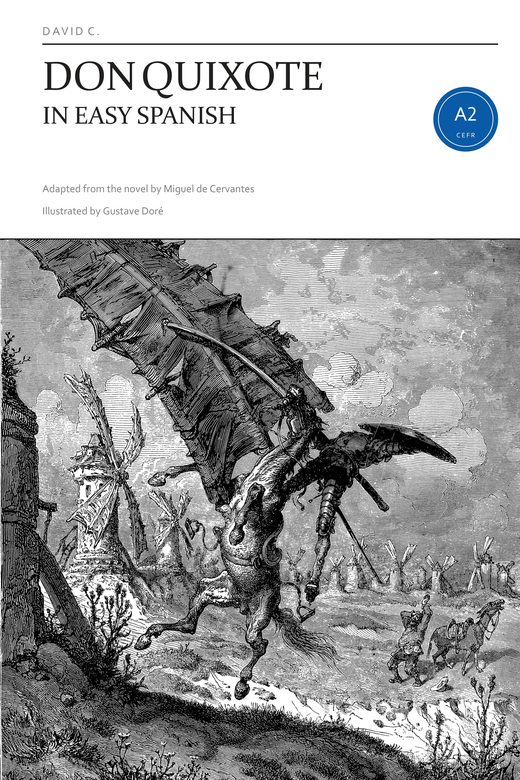
Don Quixote in Easy Spanish: the whole novel retold in Spanish you can actually read, in 58 short episodes, with the hard words glossed in the margin. It is where every Don Quixote sentence on this page comes from.
In EPUB and PDF, with a second novel in the same Spanish. See the books.
Where the course teaches this
2 lessons build it up, each one inside a chapter of the story rather than in the abstract. Free to read, with the vocabulary, the audio and the exercises.
- The pluperfect: what had already happenedLesson 50The Captive of Algiers
- Hubiera outside sentences with siLesson 81Sancho Gives Up the Governorship
Next to this one
The points that sit closest to this one, and that a student usually meets around the same time.