A1 to A2 · Updated
The verb tener: forms and tener expressions
Tener means to have, and Spanish uses it where English uses to be: for age, hunger, cold and fear. It is irregular in a way that repeats in dozens of other verbs, and tener que is how Spanish says have to.
The short answer
Present: tengo, tienes, tiene, tenemos, tenéis, tienen. Spanish says tengo veinte años, tengo hambre, tengo frío, where English says I am. Tener que plus infinitive is have to: tengo que trabajar. Intensify these with mucho or mucha, never muy.
How to remember it
Where English is, Spanish has
| Age | tener + number + años | Tengo treinta años |
|---|---|---|
| Body states | hambre, sed, frío, calor, sueño | Tengo sed |
| Feelings | miedo, prisa, razón, suerte | Tienes razón |
| Obligation | tener que + infinitive | Tengo que irme |
| Very | mucho or mucha, not muy | Tengo mucha hambre |
The forms
Tener in the present
| person | form | note |
|---|---|---|
| yo | tengo | irregular -go |
| tú | tienes | e becomes ie |
| él, ella, usted | tiene | e becomes ie |
| nosotros | tenemos | regular |
| vosotros | tenéis | regular |
| ellos, ustedes | tienen | e becomes ie |
16 sentences that show the difference
Everyday Spanish, the kind you would actually say. The label under each one says which part of the rule it shows.
¿Cuántos años tienes?
How old are you?
Age
Tengo veinticinco años.
I am twenty-five.
Age, with años
Tengo hambre.
I am hungry.
Hambre
Tengo mucha sed.
I am very thirsty.
Mucha, not muy
¿Tienes frío?
Are you cold?
Frío
Tiene mucho calor.
He is very hot.
Calor
Los niños tienen sueño.
The children are sleepy.
Sueño
Tengo miedo a los perros.
I am afraid of dogs.
Miedo a
Tienes razón.
You are right.
Razón
Tenemos prisa.
We are in a hurry.
Prisa
¡Qué suerte tienes!
You are so lucky!
Suerte
Tengo que estudiar.
I have to study.
Tener que
No tienes que venir.
You do not have to come.
No tener que
Tengo dos hermanos.
I have two brothers.
To have
Tengo ganas de verte.
I am looking forward to seeing you.
Tener ganas de
¿Qué te pasa? Tengo dolor de cabeza.
What is wrong? I have a headache.
Dolor de
Where English gets in the way
English uses to be for states of the body: I am hungry, I am twenty, I am cold. Spanish treats them as things you have: tengo hambre, tengo veinte años, tengo frío. Because hambre and frío are nouns, the English very becomes mucho: tengo mucho frío, I have much cold.
The mistake to avoid
Soy veinte años, estoy hambre and tengo muy hambre. All three are English thinking. Age and hunger are had, and nouns take mucho: tengo veinte años, tengo mucha hambre.
The cases that break the rule
Mucha hambre
Hambre, sed, frío and the rest are nouns, so very is mucho or mucha, never muy. And hambre is feminine although it takes el: el hambre, mucha hambre.
Tengo veinte años
Never soy veinte or tengo veinte without años in a full answer. In a quick reply, veinte alone is fine.
Hace frío
Tener frío is a person feeling cold. For the weather it is hacer: hace frío. For an object, estar: la sopa está fría.
Tener que y hay que
Tener que has a subject, tengo que salir. Hay que has none and states a general need: hay que salir, we need to, one must.
No tiene que
No tener que means do not have to, it is not necessary. It does not mean must not. For a prohibition use no debes or no se puede.
Tengo, tienes
Two irregularities in one verb: -go in yo, and e to ie when the stress lands on it. Venir works exactly the same way: vengo, vienes, viene.
Tener exercises
8 sentences to fill in. Type your answer and check it, or read them straight through with the answers showing. Accents count here, the way they count in the language.
-
Mi hija ___ seis años.
My daughter is six.
tiene · Age takes tener, third person singular.
-
¿Tú ___ hambre?
Are you hungry?
tienes · Tú form, with the e to ie change.
-
Yo ___ que trabajar mañana.
I have to work tomorrow.
tengo · Yo takes the -go form, and tener que means have to.
-
Tengo ___ sed.
I am very thirsty.
mucha · Sed is a feminine noun, so mucha, not muy.
-
Abre la ventana, tengo mucho ___.
Open the window, I am very hot.
calor · The person feels hot, so tener calor.
-
Nosotros ___ prisa.
We are in a hurry.
tenemos · Nosotros is regular, tenemos.
-
Hoy ___ mucho frío en Madrid.
It is very cold in Madrid today.
hace · Weather takes hacer. Tener frío is only for a person.
-
Tienes ___. Es mejor esperar.
You are right. It is better to wait.
razón · Being right is tener razón.
More exercises, from Don Quixote
8 more, these ones straight out of the course: the inn, the windmills, Rocinante and the road. Same rule, older Spanish.
-
Don Quijote ___ casi cincuenta años.
Don Quixote is nearly fifty.
tiene · Age with tener.
-
Sancho siempre ___ hambre.
Sancho is always hungry.
tiene · Hunger with tener.
-
Señor, yo ___ miedo de los gigantes.
Sir, I am afraid of the giants.
tengo · Fear with tener, and the yo form ends in -go.
-
Un caballero ___ que tener una dama.
A knight has to have a lady.
tiene · Tener que plus infinitive.
-
Sancho tiene ___ sueño después de comer.
Sancho is very sleepy after eating.
mucho · Sueño is masculine, so mucho.
-
Vuestra merced ___ razón, señor.
Your grace is right, sir.
tiene · Vuestra merced takes the third person, like usted.
-
Nosotros ___ que buscar a Dulcinea.
We have to look for Dulcinea.
tenemos · Tener que in the nosotros form.
-
Los pastores ___ frío por la noche.
The shepherds are cold at night.
tienen · People feeling cold, tener frío.
Common questions
How do you conjugate tener?
In the present: tengo, tienes, tiene, tenemos, tenéis, tienen. In the preterite it changes stem completely: tuve, tuviste, tuvo.
Why does Spanish say tengo hambre and not estoy hambre?
Because hambre is a noun, hunger, not an adjective. You have hunger. The same applies to sed, frío, calor, sueño, miedo and prisa.
How do you say how old are you in Spanish?
¿Cuántos años tienes?, or ¿cuántos años tiene usted? to be formal. The answer is tengo... años.
What is the difference between tener que and deber?
Tener que is an obligation from outside: tengo que trabajar el sábado. Deber sounds more like a moral duty or advice: debes descansar. In everyday speech tener que is far more common.
Is it muy hambre or mucha hambre?
Mucha hambre. Hambre is a noun, and nouns are quantified with mucho, not muy. The same goes for mucho frío, mucho miedo.
What does tener ganas de mean?
To feel like or to look forward to: tengo ganas de verte, I cannot wait to see you, no tengo ganas de salir, I do not feel like going out.
What is the difference between tener frío and hacer frío?
Tengo frío is how you feel. Hace frío is the weather. Está frío describes a thing: el café está frío.
Is tener que the same as hay que?
Both express need. Tener que says who must: tienes que firmar. Hay que is impersonal: hay que firmar, it has to be signed.
The things to remember
- Tengo, tienes, tiene, tenemos, tenéis, tienen.
- Age, hunger, thirst, cold, fear and hurry take tener, not ser or estar.
- Very with these is mucho or mucha, never muy.
- Tener que plus infinitive means have to.
- Feeling cold is tener frío, cold weather is hacer frío.
The book this comes from
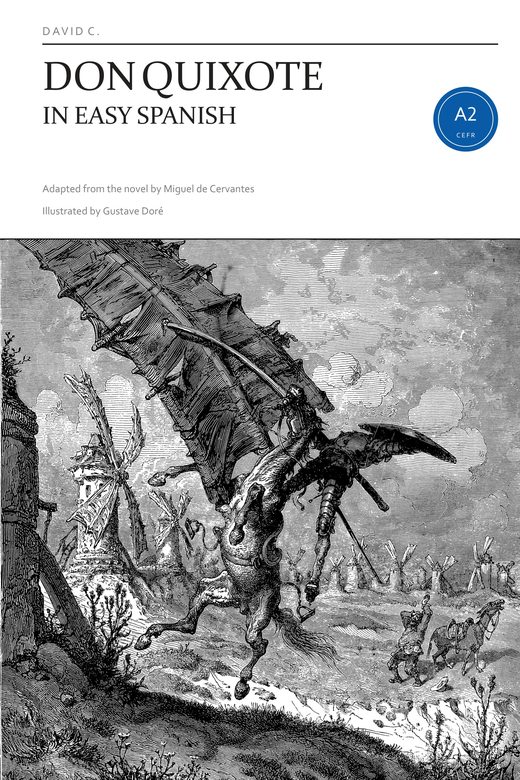
Don Quixote in Easy Spanish: the whole novel retold in Spanish you can actually read, in 58 short episodes, with the hard words glossed in the margin. It is where every Don Quixote sentence on this page comes from.
In EPUB and PDF with its audiobook, and a second novel in the same Spanish. See the books.
Where the course teaches this
2 lessons build it up, each one inside a chapter of the story rather than in the abstract. Free to read, with the vocabulary, the audio and the exercises.
- Numbers, ordinals and ageLesson 8Don Quixote of La Mancha
- Irregular preterite: ser, ir, estar, tener, hacerLesson 22The Basque squire
Next to this one
The points that sit closest to this one, and that a student usually meets around the same time.