A1 · Updated
Spanish irregular yo verbs: tengo, hago, salgo
A small group of very common verbs is irregular in one form only, the yo of the present: hago, pongo, salgo, conozco. Everything else is regular. Learn the pattern in -go and -zco and twenty verbs fall into place.
The short answer
Some verbs are irregular only in yo. Many end in -go: hacer, hago, poner, pongo, salir, salgo, tener, tengo, venir, vengo, decir, digo. Verbs in -cer and -cir take -zco: conocer, conozco. A few are one-offs: sé, doy, veo, quepo.
How to remember it
Only yo breaks, the rest follow the rules
| -go | hacer, poner, salir, traer, caer, valer | Hago la cena |
|---|---|---|
| -go + stem change | tener, venir, decir | Tengo, tienes |
| -zco | verbs in vowel + -cer, -cir | Conozco Madrid |
| One-offs | saber, dar, ver, caber | No sé |
| Everyone else | regular | Haces, hace, hacemos |
The forms
The yo form and the rest
| verb | yo | tú, él, nosotros... |
|---|---|---|
| hacer | hago | haces, hace, hacemos, hacéis, hacen |
| poner | pongo | pones, pone, ponemos, ponéis, ponen |
| salir | salgo | sales, sale, salimos, salís, salen |
| traer | traigo | traes, trae, traemos, traéis, traen |
| conocer | conozco | conoces, conoce, conocemos... |
| saber | sé | sabes, sabe, sabemos, sabéis, saben |
| dar | doy | das, da, damos, dais, dan |
| ver | veo | ves, ve, vemos, veis, ven |
16 sentences that show the difference
Everyday Spanish, the kind you would actually say. The label under each one says which part of the rule it shows.
Hago la compra los sábados.
I do the shopping on Saturdays.
Hacer
Pongo la mesa.
I lay the table.
Poner
Salgo de casa a las ocho.
I leave home at eight.
Salir
Traigo vino.
I will bring wine.
Traer
Tengo dos hermanas.
I have two sisters.
Tener
Vengo de Londres.
I come from London.
Venir
Digo la verdad.
I tell the truth.
Decir
No conozco a tu hermano.
I do not know your brother.
Conocer
Conduzco al trabajo.
I drive to work.
Conducir
Te ofrezco un café.
Can I offer you a coffee?
Ofrecer
No sé.
I do not know.
Saber
Te doy mi número.
I will give you my number.
Dar
No veo nada.
I cannot see anything.
Ver
Me caigo de sueño.
I am falling asleep.
Caer
Oigo música.
I hear music.
Oír
¿Qué haces? Nada.
What are you doing? Nothing.
Tú is regular
Where English gets in the way
English irregular verbs change in the past, go, went, and almost never in the present. In Spanish the most common verbs break in the present, and only in the first person, which is the form a learner uses most when talking about themselves.
The mistake to avoid
Haco, poneo, conoco, built by applying the regular ending. It is hago, pongo, conozco. The opposite mistake is just as common: carrying the -g into the other forms, hagas for haces.
The cases that break the rule
Tengo, tienes
Tener, venir and decir have both changes: -go in yo, and a stem change in tú, él and ellos. Tengo, tienes, vengo, vienes, digo, dices.
Oigo, oyes
Oír is -go in yo and puts a y between vowels: oigo, oyes, oye, oímos, oís, oyen.
Hacer, haces
The -go is only in yo. Haces, hace and hacen are completely regular, which is the point of this group.
Conozco
The -zco group is every verb in vowel + -cer or -cir: conocer, parecer, ofrecer, conducir, traducir, producir. Hacer and decir are not in it because they end in -go.
Sé
Sé needs its accent to tell it apart from the pronoun se. No sé, I do not know, se llama Ana, her name is Ana.
Ver, veo
Ver keeps the e of the old verb veer in yo, veo, and drops it everywhere else: ves, ve, vemos.
Irregular yo verbs exercises
8 sentences to fill in. Type your answer and check it, or read them straight through with the answers showing. Accents count here, the way they count in the language.
-
Yo ___ los deberes por la tarde. (hacer)
I do my homework in the afternoon.
hago · Hacer is -go in yo.
-
Yo ___ de trabajar a las seis. (salir)
I finish work at six.
salgo · Salir, -go in yo.
-
No ___ a nadie aquí. (conocer)
I do not know anyone here.
conozco · Vowel + -cer, so -zco.
-
No ___ dónde está. (saber)
I do not know where it is.
sé · Sé, with an accent.
-
¿Tú qué ___ esta noche? (hacer)
What are you doing tonight?
haces · Only yo is irregular. Tú is regular, haces.
-
Yo ___ el postre. (traer)
I will bring dessert.
traigo · Traer, -igo in yo.
-
Siempre ___ la verdad. (decir, yo)
I always tell the truth.
digo · Decir: -go and e to i together.
-
Desde aquí ___ el mar. (ver, yo)
I can see the sea from here.
veo · Ver keeps an e in yo: veo.
More exercises, from Don Quixote
8 more, these ones straight out of the course: the inn, the windmills, Rocinante and the road. Same rule, older Spanish.
-
Yo ___ de mi pueblo esta noche. (salir)
I am leaving my village tonight.
salgo · Salir, -go in yo.
-
Yo ___ a buscar aventuras. (venir)
I come to look for adventures.
vengo · Venir, -go in yo.
-
No ___ a ese caballero. (conocer)
I do not know that knight.
conozco · -zco in yo.
-
Yo ___ gigantes, Sancho. (ver)
I see giants, Sancho.
veo · Ver: veo.
-
Yo no ___ leer, señor. (saber)
I cannot read, sir.
sé · Knowing how to do something is saber: no sé leer.
-
Yo ___ pan y queso en las alforjas. (traer)
I have bread and cheese in the saddlebags.
traigo · Traer: traigo.
-
Yo te ___ una ínsula, Sancho. (dar)
I give you an island, Sancho.
doy · Dar: doy.
-
Yo ___ la lanza aquí. (poner)
I put the lance here.
pongo · Poner: pongo.
Common questions
What are yo-go verbs?
Verbs whose yo form in the present ends in -go: hago, pongo, salgo, traigo, caigo, valgo, tengo, vengo, digo, oigo. The rest of their present is regular, or only stem-changing.
Why is it conozco and not conoco?
Verbs ending in a vowel plus -cer or -cir add a z before the c in yo to keep the sound: conozco, parezco, conduzco, traduzco.
Are these verbs irregular in other tenses?
Many are, in their own ways: hice, puse, tuve, dije in the preterite. The yo form of the present also passes to the whole present subjunctive: haga, ponga, conozca.
Why does sé have an accent?
To tell I know apart from the pronoun se. Sé la respuesta, I know the answer. Se levanta, he gets up.
Is hacer irregular in all forms?
Not in the present. Only hago is irregular, the rest is haces, hace, hacemos, hacéis, hacen.
What does me caigo mean?
I fall, from caerse. Me caigo de sueño is a common way of saying I am so tired I could drop.
Which yo verbs should I learn first?
Tengo, hago, voy, soy, estoy, sé, digo, salgo, pongo, conozco. Those ten cover most of what you say about yourself at A1.
Is dar irregular?
Only in yo, doy, like voy, soy and estoy. The rest is regular: das, da, damos, dais, dan.
The things to remember
- These verbs are irregular only in the yo form of the present.
- Many end in -go: hago, pongo, salgo, traigo, tengo, vengo, digo.
- Verbs in vowel + -cer or -cir take -zco: conozco, conduzco.
- Sé, doy, veo and quepo are one-offs to memorise.
- The irregular yo is also the base of the present subjunctive: haga, conozca.
The book this comes from
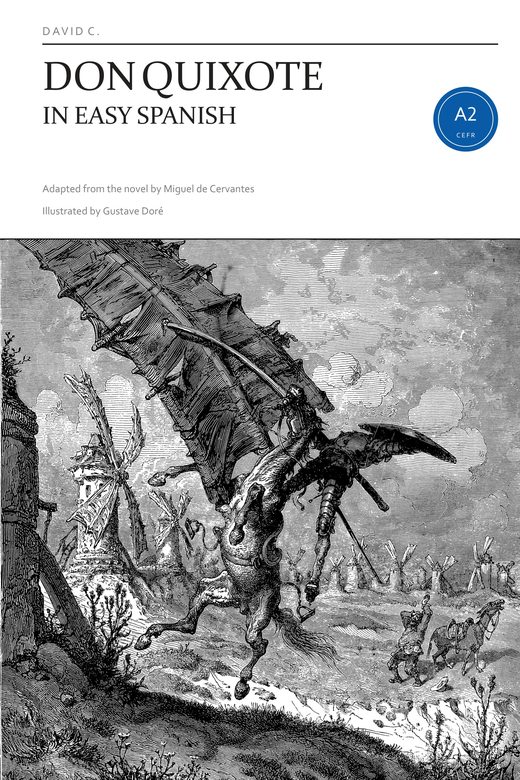
Don Quixote in Easy Spanish: the whole novel retold in Spanish you can actually read, in 58 short episodes, with the hard words glossed in the margin. It is where every Don Quixote sentence on this page comes from.
In EPUB and PDF with its audiobook, and a second novel in the same Spanish. See the books.
Where the course teaches this
2 lessons build it up, each one inside a chapter of the story rather than in the abstract. Free to read, with the vocabulary, the audio and the exercises.
- Numbers, ordinals and ageLesson 8Don Quixote of La Mancha
- Este, ese, aquel: the three distancesLesson 5The great-grandfather's armour
Next to this one
The points that sit closest to this one, and that a student usually meets around the same time.