Spanish grammar · A1 · Updated
Muy vs mucho in Spanish
Muy goes in front of an adjective or an adverb and never changes: muy alto, muy despacio. Mucho goes with a noun or a verb, and it agrees when it goes with a noun: muchos libros, trabaja mucho. You cannot say muy mucho, and "very much" is muchísimo.
The short answer
Muy goes in front of adjectives and adverbs and never changes: muy alto, muy despacio. Mucho goes with nouns and verbs, and with a noun it agrees: mucha gente, muchos libros. If you can count it or measure it, it is mucho; if it describes, it is muy.
How to remember it
Muy describes, mucho measures
| Muy | in front of an adjective, never changes | Muy alto |
|---|---|---|
| Muy | in front of an adverb, never changes | Muy despacio |
| Mucho | in front of a noun, and it agrees | Muchas casas |
| Mucho | after a verb, and then it does not change | Trabaja mucho |
| Never together | muy mucho does not exist | ✗ Muy mucho |
The forms
Which one goes where
| what follows | which | example |
|---|---|---|
| an adjective | muy | muy cansado |
| an adverb | muy | muy bien |
| a masculine noun | mucho | mucho dinero |
| a feminine noun | mucha | mucha gente |
| a plural noun | muchos, muchas | muchos amigos |
| nothing, after a verb | mucho | come mucho |
20 sentences that show the difference
Everyday Spanish, the kind you would actually say. The label under each one says which part of the rule it shows.
Estoy muy cansado.
I am very tired.
Before an adjective
Es muy simpática.
She is very nice.
Before an adjective
Habla muy despacio.
He speaks very slowly.
Before an adverb
Muy bien, gracias.
Very well, thanks.
Before an adverb
Hay mucha gente.
There are a lot of people.
Before a feminine noun
Tengo mucho trabajo.
I have a lot of work.
Before a masculine noun
Tiene muchos amigos.
He has a lot of friends.
Plural
Compró muchas cosas.
She bought a lot of things.
Feminine plural
Trabaja mucho.
He works a lot.
After a verb, no agreement
Come mucho.
He eats a lot.
After a verb
Me gusta mucho.
I like it a lot.
After a verb
Llueve mucho aquí.
It rains a lot here.
After a verb
Tengo mucha hambre.
I am very hungry.
Hambre is a noun in Spanish
Tengo mucho frío.
I am very cold.
Frío is a noun here
Hace mucho calor.
It is very hot.
Calor is a noun
Muchas gracias.
Thank you very much.
Gracias is a noun
Es mucho mejor.
It is much better.
Mucho before an irregular comparative
Mucho más caro.
Much more expensive.
Mucho before más
Es muy poco.
It is very little.
Muy before poco
No mucho.
Not much.
On its own
Where English gets in the way
Two differences at once in the same phrase. English stacks adjectives in front of the noun and needs no linking word: a skinny old horse. Spanish puts them behind and normally joins the last two with y: un caballo flaco y viejo. You will meet adjectives in front later — un pobre hidalgo, a pitiable gentleman, against un hidalgo pobre, one with no money — but that is a deliberate effect, not the default. For now: noun first.
The mistake to avoid
The English word order comes out first every time: ✗ un flaco caballo, ✗ un sonoro nombre. Turn them round: ✓ un caballo flaco, ✓ un nombre sonoro. The other one is mucho where muy belongs: ✗ es mucho viejo, ✗ mucho bueno. In front of an adjective it is always ✓ muy viejo, ✓ muy bueno — and muy never takes an -a or an -s.
The cases that break the rule
Tengo mucha hambre
Hunger, thirst, cold, heat, fear and sleep are nouns in Spanish, not adjectives. So it is mucha hambre and mucho frío, never muy hambre. This is the mistake almost everybody makes first.
Mucho mejor
Before the irregular comparatives mejor, peor, mayor, menor and before más and menos, it is mucho and not muy: mucho mejor, mucho más caro.
Trabaja mucho
After a verb, mucho never agrees with anything, because there is no noun for it to agree with. It behaves as an adverb there.
Muchas gracias
Gracias is a plural noun, so the word in front of it agrees. Muy gracias does not exist, however English "very thanks" would sound.
Muy mucho
Not a thing. To intensify mucho, Spanish uses muchísimo: me gusta muchísimo. That is the ordinary way to say "a huge amount".
Es muy poco
Poco is an adjective or adverb here, so it takes muy. The pair muy poco is as normal as muy mucho is impossible.
Muy vs mucho exercises
8 sentences to fill in. Type your answer and check it, or read them straight through with the answers showing. Accents count here, the way they count in the language.
-
Estoy ___ cansado después del viaje.
I am very tired after the trip.
muy · Cansado is an adjective, so muy, and muy never changes.
-
Hoy hay ___ gente en la calle.
There are a lot of people in the street today.
mucha · Gente is a feminine noun, so mucha agrees with it.
-
Mi hermano trabaja ___.
My brother works a lot.
mucho · After a verb, and there it never agrees with anything.
-
Tengo ___ hambre, vamos a comer.
I am very hungry, let us go and eat.
mucha · Hambre is a noun in Spanish, not an adjective. Muy hambre does not exist.
-
Este vino es ___ mejor que el otro.
This wine is much better than the other one.
mucho · Mucho before mejor. The same goes for peor, más and menos.
-
Habla ___ despacio, no le entiendo.
He speaks very slowly, I do not understand him.
muy · Despacio is an adverb, so muy.
-
Compramos ___ cosas en el mercado.
We bought a lot of things at the market.
muchas · Cosas is a feminine plural noun, so muchas agrees on both counts.
-
___ gracias por todo.
Thank you very much for everything.
Muchas · Gracias is a plural noun, so the word in front agrees with it.
More exercises, from Don Quixote
8 more, these ones straight out of the course: the inn, the windmills, Rocinante and the road. Same rule, older Spanish.
-
Rocinante está ___ flaco.
Rocinante is very thin.
muy · Muy, because it sits in front of an adjective. Mucho never does.
-
Sancho come ___.
Sancho eats a lot.
mucho · Mucho, because it comes after a verb and says how much. Muy cannot stand there.
-
Hay ___ molinos en el campo.
There are many windmills in the field.
muchos · In front of a noun, mucho agrees: muchos molinos, muchas ventas.
-
La venta está ___ lejos.
The inn is very far.
muy · Lejos is an adverb, and adverbs also take muy.
-
Tengo ___ hambre.
I am very hungry.
mucha · Hambre is a noun in Spanish, so it takes mucha, not muy. Muy hambre does not exist.
-
Ya es ___ tarde para salir.
It is very late to leave.
muy · Tarde here is an adverb, so muy. Compare tengo mucha prisa, where prisa is a noun.
-
Te lo agradezco ___.
Thank you very much.
mucho · It modifies the verb agradecer, so mucho, and it goes after it.
-
Hace ___ frío esta noche.
It is very cold tonight.
mucho · Frío after hacer is a noun, so mucho frío. Hace muy frío is the classic mistake.
Common questions
When do I use muy and when mucho?
Muy modifies an adjective or an adverb: muy alto, muy despacio. Mucho modifies a noun or a verb: mucho dinero, trabaja mucho. In front of a noun mucho also has to agree with it.
How do I say "very much"?
Muchísimo. Muy mucho does not exist in Spanish. Me gusta muchísimo, and with a noun it agrees as well: muchísimas gracias.
Why is it tengo mucha hambre and not muy hambre?
Because hambre is a noun in Spanish, not an adjective as "hungry" is in English. Everything built with tener works the same way: mucho frío, mucha sed, mucho sueño.
Can muy stand on its own?
No. Muy always needs an adjective or an adverb right after it, so it can never be the answer to a question. ¿Te gusta? Mucho. If you say muy on its own a Spaniard will wait for the rest of the sentence.
Is it muy mejor or mucho mejor?
Mucho mejor. Comparatives take mucho, never muy, and the same goes for mucho peor, mucho mayor, mucho menor and mucho más. That is the one place where muy in front of an adjective is wrong.
How do I say too much?
Demasiado, and it behaves like mucho: it agrees when it goes with a noun (demasiada gente) and stays flat when it goes with a verb or an adjective (come demasiado, demasiado caro).
Does mucho change for gender and number?
Only when it is describing a noun: mucho pan, mucha gente, muchos libros, muchas casas. When it goes with a verb it never changes: trabaja mucho, trabajan mucho.
What is the difference between mucho and muchos?
Mucho goes with things you cannot count: mucho dinero, mucho tiempo. Muchos goes with things you can: muchos euros, muchas horas. English hides this behind much and many, and Spanish uses the same word for both.
The things to remember
- Muy goes with adjectives and adverbs, and never changes.
- Mucho goes with nouns and agrees with them, or follows a verb and then does not change.
- Hunger, thirst, cold, heat and sleep are nouns: mucha hambre, mucho frío.
- Before mejor, peor, más and menos, it is mucho: mucho mejor.
- Muy mucho does not exist. Use muchísimo instead.
The same rule in Don Quixote
Real lines from the course, not invented examples. Each one is the sentence the lesson uses to introduce the point.
un caballo flaco y viejo
a skinny old horse
The book this comes from
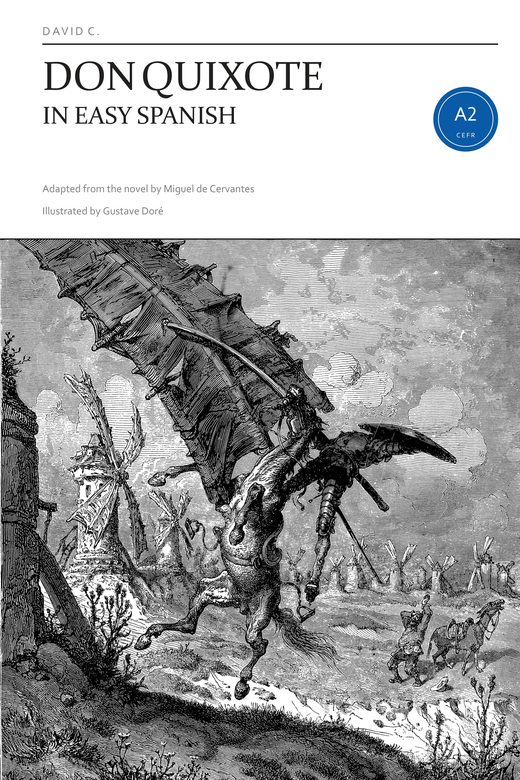
Don Quixote in Easy Spanish: the whole novel retold in Spanish you can actually read, in 58 short episodes, with the hard words glossed in the margin. It is where every Don Quixote sentence on this page comes from.
In EPUB and PDF, with a second novel in the same Spanish. See the books.
Where the course teaches this
One lesson covers it, each one inside a chapter of the story rather than in the abstract. Free to read, with the vocabulary, the audio and the exercises.
- The adjective goes after. Muy, poco, mucho, bastanteLesson 7The name of the horse
Next to this one
The points that sit closest to this one, and that a student usually meets around the same time.