A2 · Updated
Estar + gerund: the Spanish present progressive
Estar plus a gerund, estoy comiendo, says something is happening right now. It looks like the English -ing, but Spanish uses it much less: the simple present already covers most of what English does with I am doing.
The short answer
Estar in the present + gerund: estoy hablando, estás comiendo. The gerund is -ando for -ar verbs and -iendo for -er and -ir verbs. Use it for actions in progress right now. Do not use it for the future, where English says I am leaving tomorrow: that is me voy mañana.
How to remember it
Estar + -ando or -iendo, only for what is happening now
| -ar verbs | -ando | Estoy trabajando |
|---|---|---|
| -er and -ir verbs | -iendo | Está escribiendo |
| Vowel before -iendo | becomes -yendo | Estoy leyendo |
| Right now | an action in progress | ¿Qué estás haciendo? |
| Not the future | use the present or ir a | Mañana salgo |
The forms
Estar and the gerund
| person | estar | gerund |
|---|---|---|
| yo | estoy | hablando |
| tú | estás | comiendo |
| él, ella, usted | está | viviendo |
| nosotros | estamos | leyendo |
| vosotros | estáis | durmiendo |
| ellos, ustedes | están | pidiendo |
16 sentences that show the difference
Everyday Spanish, the kind you would actually say. The label under each one says which part of the rule it shows.
¿Qué estás haciendo?
What are you doing?
Right now
Estoy cocinando.
I am cooking.
-ar, -ando
Está lloviendo.
It is raining.
Weather in progress
Los niños están durmiendo.
The children are sleeping.
Dormir, durmiendo
Estoy leyendo un libro muy bueno.
I am reading a very good book.
-yendo
Estamos esperando el autobús.
We are waiting for the bus.
Nosotros
No te oigo, estoy conduciendo.
I cannot hear you, I am driving.
Explaining the moment
Me estoy duchando.
I am having a shower.
Pronoun before estar
Estoy duchándome.
I am having a shower.
Pronoun on the gerund
Esta semana estoy trabajando mucho.
I am working a lot this week.
A temporary period
Trabajo en un banco.
I work in a bank.
A fact, simple present
Mañana voy al médico.
I am going to the doctor tomorrow.
Future, not progressive
¿Qué dices?
What are you saying?
Simple present is enough
Estaba durmiendo cuando llamaste.
I was sleeping when you called.
In the past
Sigo viviendo en Madrid.
I am still living in Madrid.
Seguir + gerund
Llevo una hora esperando.
I have been waiting for an hour.
Llevar + gerund
Where English gets in the way
English uses -ing far more than Spanish uses the gerund. English needs it to say what is happening now, because I work means a habit. Spanish trabajo can mean both, so the progressive is only an extra when you want to stress that it is happening at this moment. English also uses -ing for plans and states, and Spanish uses it for neither.
The mistake to avoid
Estoy yendo a Madrid mañana and estoy llevando una chaqueta. The first is a future, voy a Madrid mañana. The second is a state, llevo una chaqueta.
The cases that break the rule
Voy mañana
English uses -ing for the future, I am leaving tomorrow. Spanish never does: salgo mañana or voy a salir mañana. Estoy saliendo mañana sounds wrong.
Leyendo, oyendo
When the stem ends in a vowel, -iendo becomes -yendo: leer, leyendo, oír, oyendo, ir, yendo, traer, trayendo.
Durmiendo, pidiendo
-ir verbs with a stem change keep a smaller version of it in the gerund: o becomes u, e becomes i. Dormir, durmiendo, pedir, pidiendo, decir, diciendo.
Estoy sentado
Positions use the participle, not the gerund: estoy sentado, I am sitting, está tumbada, she is lying down. Estoy sentando means I am seating someone.
Llevo un abrigo
States that English puts in -ing, like wearing, take the simple present: llevo gafas. The same with having, wanting and liking: never estoy teniendo.
Ir, venir
Estar yendo and estar viniendo exist but are rare. ¿Dónde vas? is the normal way to ask where are you going.
Present progressive exercises
8 sentences to fill in. Type your answer and check it, or read them straight through with the answers showing. Accents count here, the way they count in the language.
-
Ahora mismo estoy ___. (trabajar)
I am working right now.
trabajando · -ar verb, so -ando.
-
¿Qué ___ haciendo tú? (estar)
What are you doing?
estás · Estar agrees with the subject, tú.
-
Mi abuela está ___ el periódico. (leer)
My grandmother is reading the newspaper.
leyendo · A vowel before -iendo, so -yendo.
-
Los niños están ___. (dormir)
The children are sleeping.
durmiendo · Dormir keeps a small stem change: o to u.
-
Está ___ mucho. (llover)
It is raining a lot.
lloviendo · -er verb, -iendo.
-
Mañana ___ a Sevilla. (ir, yo)
I am going to Seville tomorrow.
voy · Future plans never take the progressive in Spanish.
-
Estamos ___ la cena. (preparar)
We are making dinner.
preparando · -ar, -ando.
-
El camarero está ___ la cuenta. (traer)
The waiter is bringing the bill.
trayendo · Traer has a vowel before the ending, so -yendo.
More exercises, from Don Quixote
8 more, these ones straight out of the course: the inn, the windmills, Rocinante and the road. Same rule, older Spanish.
-
Don Quijote está ___ libros de caballerías. (leer)
Don Quixote is reading books of chivalry.
leyendo · Leer, leyendo.
-
Sancho está ___ debajo de un árbol. (dormir)
Sancho is sleeping under a tree.
durmiendo · Dormir, durmiendo.
-
Los molinos están ___ sus brazos. (mover)
The windmills are moving their arms.
moviendo · -er verb, -iendo.
-
¿Qué ___ haciendo vuestra merced? (estar)
What is your grace doing?
está · Vuestra merced takes the third person.
-
El ventero está ___ de don Quijote. (reírse)
The innkeeper is laughing at Don Quixote.
riéndose · Reír, riendo, and the pronoun stuck to the end needs an accent.
-
Estamos ___ a Dulcinea. (buscar)
We are looking for Dulcinea.
buscando · -ar, -ando.
-
Sancho está ___ queso y pan. (comer)
Sancho is eating cheese and bread.
comiendo · -er, -iendo.
-
Don Quijote está ___ en voz alta. (hablar)
Don Quixote is talking out loud.
hablando · -ar, -ando.
Common questions
How do you form the present progressive in Spanish?
Estar in the present + gerund: estoy, estás, está... + hablando, comiendo, viviendo.
When should I use the present progressive?
For something happening at this very moment, or in a temporary period: estoy viviendo con mis padres este año. For habits and facts use the simple present.
Can I say estoy yendo mañana?
No. Spanish never uses the progressive for the future. Say voy mañana or voy a ir mañana.
How do you form the gerund in Spanish?
-ar verbs take -ando, -er and -ir verbs take -iendo. After a vowel, -yendo: leyendo. -ir verbs with a stem change: durmiendo, pidiendo, diciendo.
Where do pronouns go with estar + gerund?
Before estar, me estoy vistiendo, or attached to the gerund with an accent, estoy vistiéndome. Both are correct.
Is estoy comiendo the same as como?
Often yes. ¿Qué haces? and ¿qué estás haciendo? can both mean what are you doing. The progressive just stresses that it is happening right now.
How do you say I am sitting in Spanish?
Estoy sentado or sentada, with the participle. The same for lying down, tumbado, and standing, de pie.
How do you say I have been doing in Spanish?
With llevar + time + gerund: llevo dos horas estudiando, I have been studying for two hours. Or estudio desde hace dos horas.
The things to remember
- Estar in the present + -ando or -iendo.
- Use it only for something in progress at this moment or this period.
- Never for the future: use the present or ir a.
- After a vowel, -iendo becomes -yendo.
- Stem-changing -ir verbs go o to u and e to i: durmiendo, pidiendo.
The book this comes from
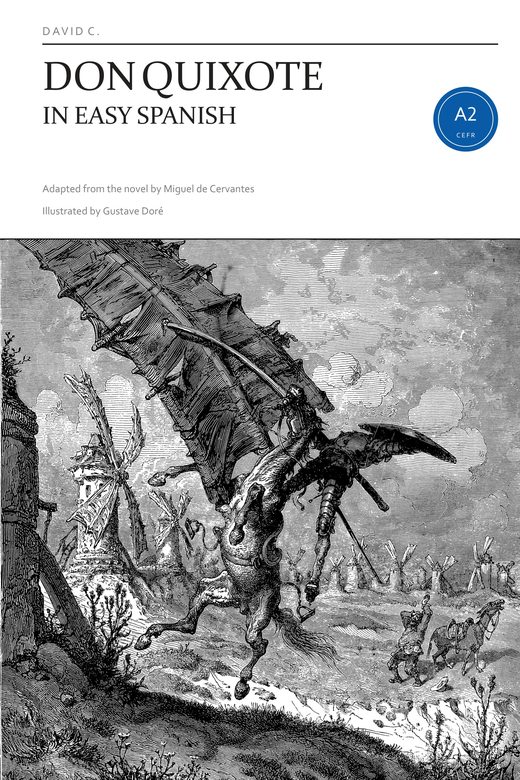
Don Quixote in Easy Spanish: the whole novel retold in Spanish you can actually read, in 58 short episodes, with the hard words glossed in the margin. It is where every Don Quixote sentence on this page comes from.
In EPUB and PDF with its audiobook, and a second novel in the same Spanish. See the books.
Where the course teaches this
2 lessons build it up, each one inside a chapter of the story rather than in the abstract. Free to read, with the vocabulary, the audio and the exercises.
- Two pronouns togetherLesson 38Ginés de Pasamonte and the stones
- Describing a place, and estar plus a participleLesson 39The suitcase in Sierra Morena
Next to this one
The points that sit closest to this one, and that a student usually meets around the same time.