C1 · Part One, Chapter 3
La Tolosa and la Molinera: who gets to be called doña
Two women at the inn help to knight don Quixote, and he rewards them by giving them the title doña. The joke depends on knowing who these women are and what don meant in 1605, and the grammar is reported speech again, this time carrying requests. This unit is about titles, names, and how courtesy was spoken.
The passage, exactly as Cervantes wrote it
Miguel de Cervantes, Part One, Chapter 3. Unadapted.
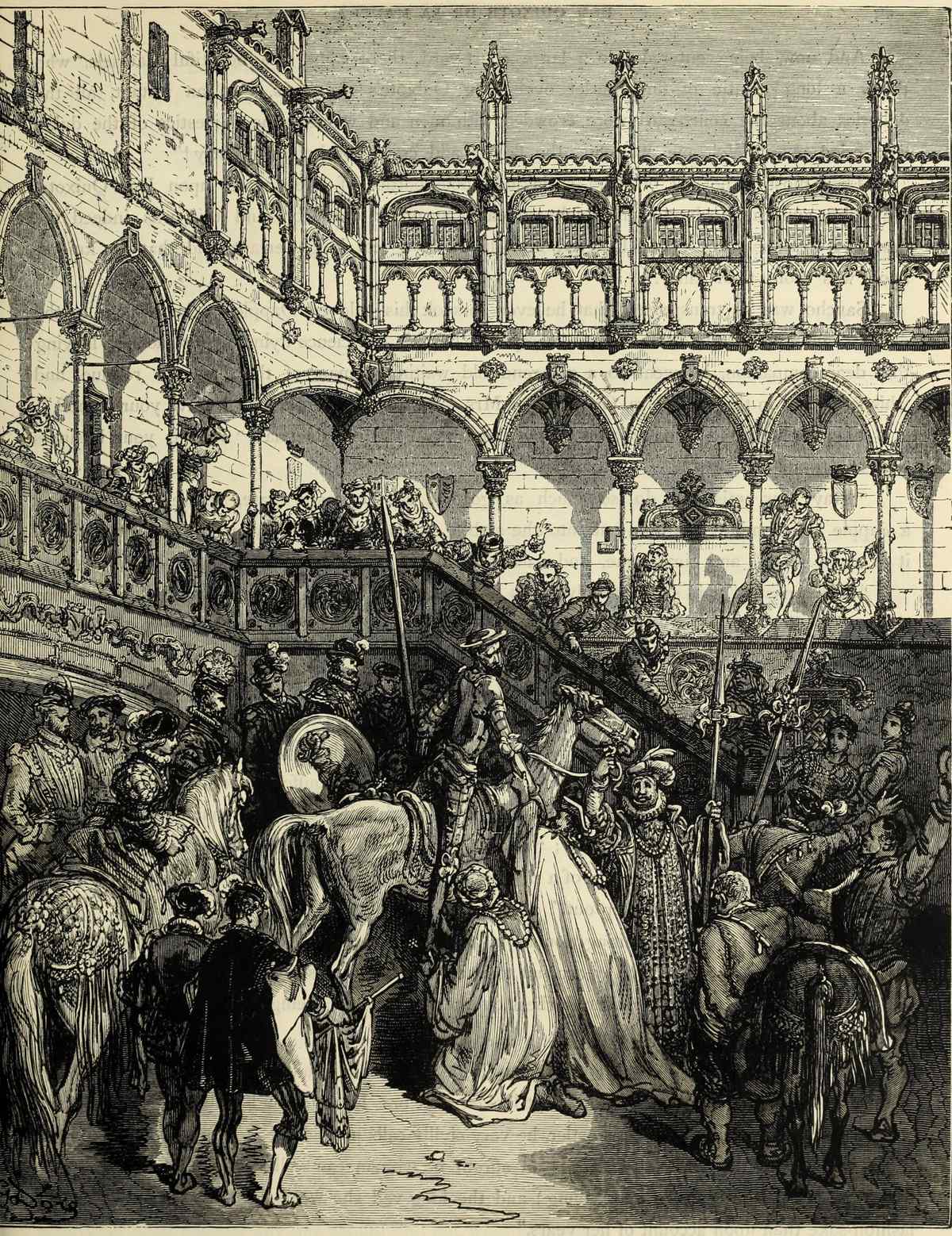
Don Quijote le preguntó cómo se llamaba, porque él supiese de allí adelante a quién quedaba obligado por la merced recebida; porque pensaba darle alguna parte de la honra que alcanzase por el valor de su brazo. Ella respondió con mucha humildad que se llamaba la Tolosa, y que era hija de un remendón natural de Toledo que vivía a las tendillas de Sancho Bienaya, y que dondequiera que ella estuviese le serviría y le tendría por señor. Don Quijote le replicó que, por su amor, le hiciese merced que de allí adelante se pusiese don y se llamase doña Tolosa. Ella se lo prometió, y la otra le calzó la espuela, con la cual le pasó casi el mismo coloquio que con la de la espada: preguntóle su nombre, y dijo que se llamaba la Molinera, y que era hija de un honrado molinero de Antequera; a la cual también rogó don Quijote que se pusiese don y se llamase doña Molinera, ofreciéndole nuevos servicios y mercedes.
Don Quixote asked her what her name was, so that he would know from then on to whom he was indebted for the favour received, since he intended to give her some share of the honour he might win by the strength of his arm. She answered very humbly that she was called la Tolosa, and that she was the daughter of a cobbler from Toledo who lived by the stalls of Sancho Bienaya, and that wherever she might be she would serve him and hold him as her lord. Don Quixote replied that, for love of him, she should do him the favour of taking the title don from then on and calling herself doña Tolosa. She promised she would, and the other one fastened on his spur, and he had almost the same conversation with her as with the one who girded on the sword. He asked her name, and she said she was called la Molinera, and that she was the daughter of an honourable miller from Antequera. Don Quixote begged her too to take the don and call herself doña Molinera, offering her new services and favours.
The same thing in Spanish as it is written today
Read the two side by side. What has changed between them is the syllabus of this level.
Don Quijote le preguntó cómo se llamaba, para saber desde entonces a quién le debía el favor recibido, porque pensaba darle parte de la honra que ganara con el valor de su brazo. Ella respondió con mucha humildad que se llamaba la Tolosa, que era hija de un zapatero remendón de Toledo que vivía junto a las tiendas de Sancho Bienaya, y que dondequiera que estuviera lo serviría y lo tendría por señor. Don Quijote le pidió que, por amor a él, le hiciera el favor de ponerse desde entonces el don y llamarse doña Tolosa. Ella se lo prometió, y la otra le puso la espuela, y con ella tuvo casi la misma conversación que con la de la espada: le preguntó su nombre, y ella dijo que se llamaba la Molinera y que era hija de un honrado molinero de Antequera. Don Quijote también le rogó que se pusiera el don y se llamara doña Molinera, y le ofreció nuevos servicios y favores.
What changed, form by form
| In the text | Today | Why it matters |
|---|---|---|
| porque él supiese | para saber | Porque with the subjunctive to express purpose, where today para que or para is used. |
| merced | favor | The same word as in vuestra merced. A favour, and the grace of the person who grants it. |
| la Tolosa | la de Tolosa | An article in front of a woman's name or nickname. Still heard in colloquial speech, and never polite. |
| remendón | zapatero remendón | A cobbler who mends shoes rather than makes them. The humblest end of the trade. |
| a las tendillas de | junto a las tiendas de | By the little stalls. A real market place in Toledo. |
| le hiciese merced que | le hiciera el favor de | Hacer merced plus que and a subjunctive. The request is reported, so the verbs go into the imperfect subjunctive. |
| se pusiese don | se pusiera el don | Ponerse don, to take the title, with no article, as if it were a garment. |
| le calzó la espuela | le puso la espuela | Calzar, to put on footwear, used here for a spur. |
| coloquio | conversación | A learned word for a very plain exchange. |
The syntax
The passage is reported speech from end to end, and it lets you watch the sequence of tenses at work. Don Quixote's purpose, porque él supiese, the honour que alcanzase, and his request that she se pusiese don all move into the imperfect subjunctive because the main verbs, preguntó and replicó, are in the past. The women's answers stay in the indicative and the conditional, se llamaba, era hija, le serviría, because they are statements of fact and promises.
What a Spanish reader hears
The two women are prostitutes travelling with muleteers, and the narrator has already called them mozas del partido. So the ceremony of knighthood is performed by an innkeeper who is a crook and two women who are for hire, and don Quixote rewards the women with the one thing they could never have, the don. In 1605 the title was jealously guarded and very widely usurped, and Spaniards joked constantly about people who helped themselves to it. Here it is handed out in the yard of an inn, as a favour, to the daughter of a cobbler.
Where the course prepares you for this
- GUSTAR and the pronouns me / te / leLesson 13The night of the armour vigil