C1 · Part One, Chapter 3
The innkeeper's advice: money and clean shirts
The innkeeper who is about to knight don Quixote asks whether he has any money, and is told that the books never mention it. His answer is one long sentence in reported speech, and it is the best place in the book to watch indirect speech work in Spanish: every verb shifts back, and the subjunctive carries the orders.
The passage, exactly as Cervantes wrote it
Miguel de Cervantes, Part One, Chapter 3. Unadapted.
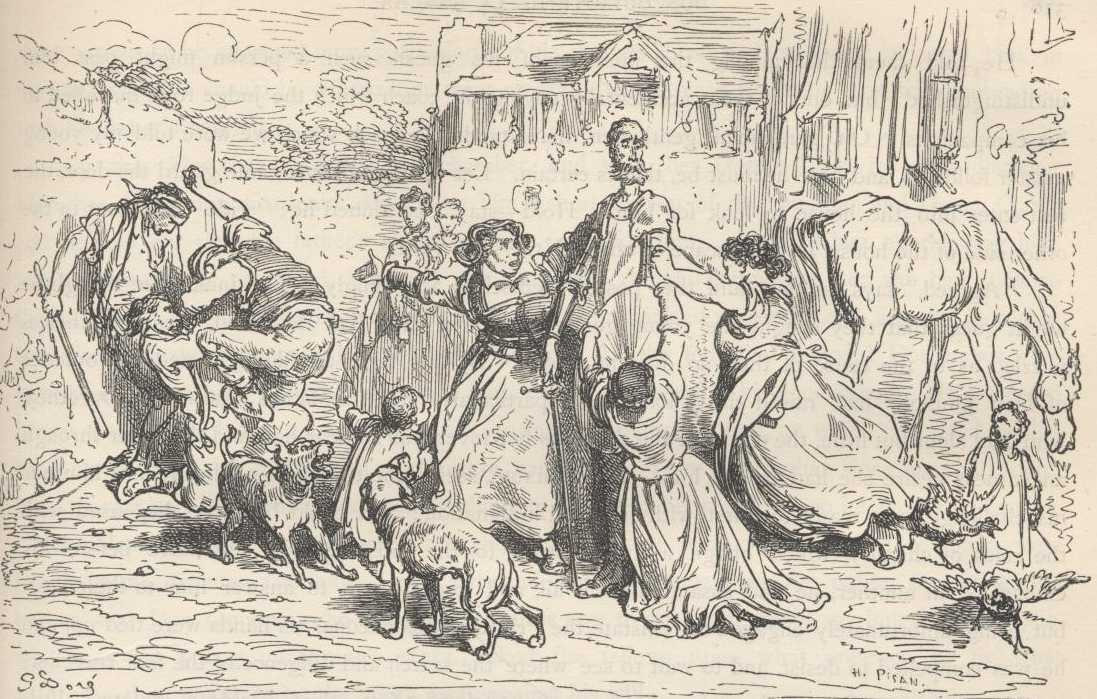
Preguntóle si traía dineros; respondió don Quijote que no traía blanca, porque él nunca había leído en las historias de los caballeros andantes que ninguno los hubiese traído. A esto dijo el ventero que se engañaba; que, puesto caso que en las historias no se escribía, por haberles parecido a los autores dellas que no era menester escrebir una cosa tan clara y tan necesaria de traerse como eran dineros y camisas limpias, no por eso se había de creer que no los trujeron; y así, tuviese por cierto y averiguado que todos los caballeros andantes, de que tantos libros están llenos y atestados, llevaban bien herradas las bolsas, por lo que pudiese sucederles; y que asimismo llevaban camisas y una arqueta pequeña llena de ungüentos para curar las heridas que recebían
He asked him whether he had any money. Don Quixote replied that he had not a penny, because he had never read in the histories of knights errant that any of them had carried it. To this the innkeeper said that he was mistaken, for even if it was not written in the histories, because their authors had thought there was no need to write down something as obvious and as necessary to carry as money and clean shirts, that was no reason to believe they did not carry them. And so he should take it as certain and proven that all knights errant, of whom so many books are full to bursting, carried well stuffed purses in case anything should happen to them, and that they also carried shirts and a small chest full of ointments to cure the wounds they received
The same thing in Spanish as it is written today
Read the two side by side. What has changed between them is the syllabus of this level.
Le preguntó si llevaba dinero. Don Quijote respondió que no llevaba ni un céntimo, porque nunca había leído en las historias de los caballeros andantes que ninguno lo llevara. A esto el ventero le dijo que se equivocaba, que aunque en las historias no se escribiera, porque a sus autores les había parecido que no hacía falta escribir algo tan evidente y tan necesario de llevar como el dinero y las camisas limpias, no por eso había que creer que no los llevaban. Y que, por tanto, tuviera por cierto y comprobado que todos los caballeros andantes, de los que están llenos tantos libros, llevaban las bolsas bien provistas, por lo que pudiera pasarles, y que también llevaban camisas y una cajita llena de ungüentos para curar las heridas que recibían
What changed, form by form
| In the text | Today | Why it matters |
|---|---|---|
| Preguntóle | le preguntó | Enclitic pronoun at the start of a sentence, the normal place for it in 1605. |
| no traía blanca | no llevaba ni un céntimo | A blanca was a small copper coin. Estar sin blanca is still how Spaniards say they are broke. |
| que ninguno los hubiese traído | que ninguno lo llevara | Ninguno in a clause under a negative verb, meaning anyone. Spanish still does this: nunca he visto que nadie lo haga. |
| traer | llevar | Traer for carrying something on you, where today the verb is llevar. |
| puesto caso que | aunque, suponiendo que | A concessive conjunction that has disappeared. |
| escrebir | escribir | An older vowel. |
| trujeron | trajeron | The old preterite of traer. Still heard in the countryside. |
| tuviese por cierto | que tuviera por cierto | An order in reported speech, carried by the imperfect subjunctive with no verb of ordering in front of it. |
| bien herradas las bolsas | las bolsas bien provistas | Herrar is to shoe a horse or bind with iron. A purse well shod. |
| recebían | recibían | Another older vowel, found all through the book. |
The syntax
Once the innkeeper starts, nothing is quoted. Every clause is reported, and the tenses shift back one step as Spanish requires: se escribía, era menester, se había de creer. The interesting moment is tuviese por cierto. There is no verb of telling in front of it. The innkeeper's order, tenga usted por cierto, has simply been moved into the imperfect subjunctive and dropped into the narration, which is how Spanish still reports an imperative.
What a Spanish reader hears
The innkeeper is a crook who has read the same books and knows exactly how to talk to a madman, so he argues from the silence of the sources: the authors did not mention money and clean shirts because they were too obvious to mention. It is a perfectly good argument, and it is also the whole programme of the novel. Cervantes is going to write down everything the books of chivalry left out, the money, the shirts, the inns and the bruises, and the first person to say so is the innkeeper.
Where the course prepares you for this
- The affirmative imperative: tú and ustedLesson 14The innkeeper's advice