C1 · Part One, Chapter 4
The merchants of Toledo: believe without seeing
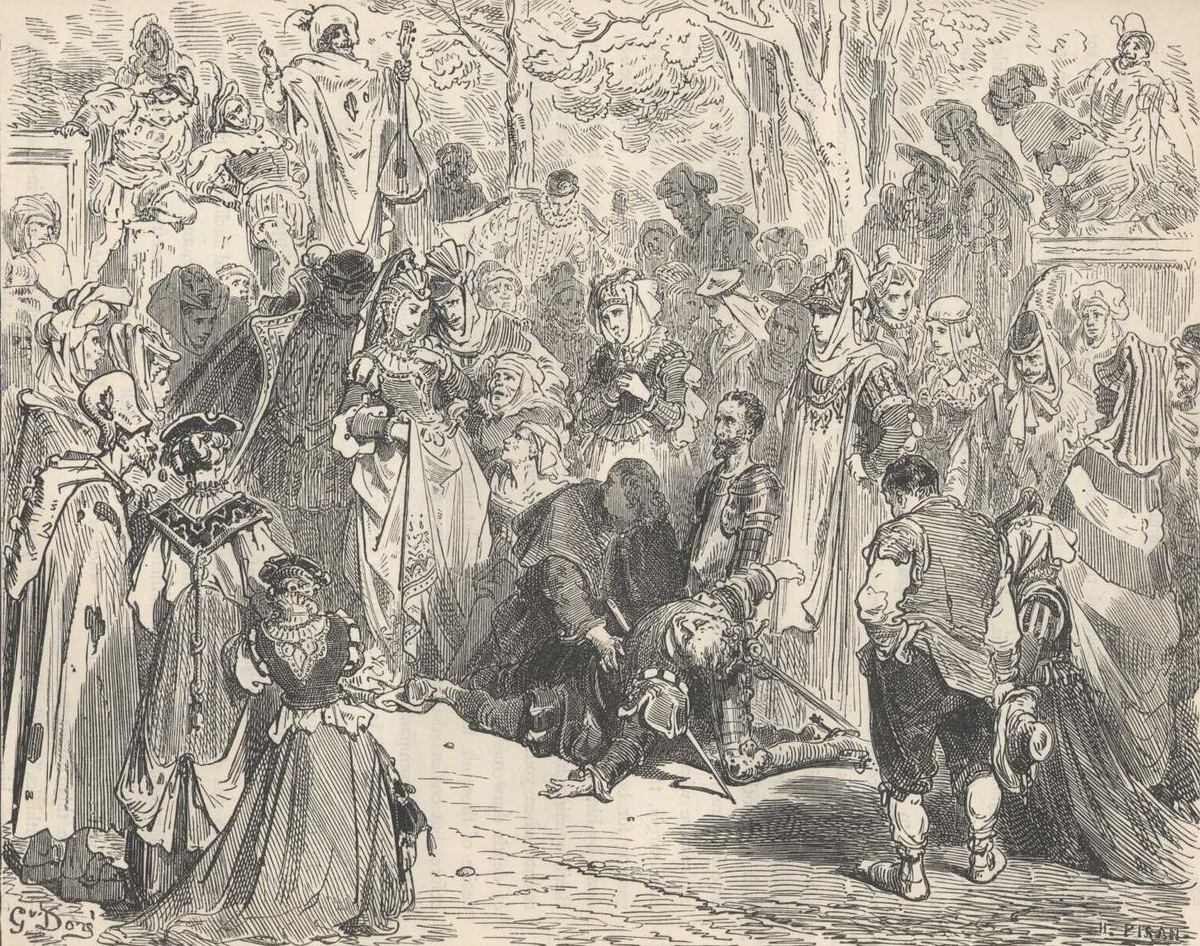
Don Quixote blocks the road and demands that a group of silk merchants swear that Dulcinea is the most beautiful woman in the world. One of them asks, very reasonably, to see her first. The answer is the knight's creed in a single sentence, and it uses the whole machinery of vos and vosotros: the imperatives, the old -ades endings and the future subjunctive.
The passage, exactly as Cervantes wrote it
Miguel de Cervantes, Part One, Chapter 4. Unadapted.
Todo el mundo se tenga, si todo el mundo no confiesa que no hay en el mundo todo doncella más hermosa que la emperatriz de la Mancha, la sin par Dulcinea del Toboso. Paráronse los mercaderes al son destas razones, y a ver la estraña figura del que las decía; y, por la figura y por las razones, luego echaron de ver la locura de su dueño; mas quisieron ver despacio en qué paraba aquella confesión que se les pedía, y uno dellos, que era un poco burlón y muy mucho discreto, le dijo: — Señor caballero, nosotros no conocemos quién sea esa buena señora que decís; mostrádnosla: que si ella fuere de tanta hermosura como significáis, de buena gana y sin apremio alguno confesaremos la verdad que por parte vuestra nos es pedida. — Si os la mostrara —replicó don Quijote—, ¿qué hiciérades vosotros en confesar una verdad tan notoria? La importancia está en que sin verla lo habéis de creer, confesar, afirmar, jurar y defender; donde no, conmigo sois en batalla, gente descomunal y soberbia. Que, ahora vengáis uno a uno, como pide la orden de caballería, ora todos juntos, como es costumbre y mala usanza de los de vuestra ralea, aquí os aguardo y espero, confiado en la razón que de mi parte tengo.
Let the whole world halt, unless the whole world confesses that there is not in all the world a maiden more beautiful than the empress of La Mancha, the peerless Dulcinea del Toboso. The merchants stopped at the sound of these words and at the sight of the strange figure who spoke them, and from the figure and from the words they soon saw that their owner was mad. But they wanted to see at leisure where this confession they were being asked for would end, and one of them, who was something of a joker and very very sharp, said to him: Sir knight, we do not know who this good lady you speak of may be. Show her to us, for if she is as beautiful as you say, we will gladly and without any pressure confess the truth that you ask of us. If I showed her to you, replied don Quixote, what would you achieve by confessing a truth so plain? The whole point is that without seeing her you must believe it, confess it, affirm it, swear it and defend it. Otherwise you are in battle with me, monstrous and arrogant people. Whether you come one by one, as the order of chivalry requires, or all together, as is the custom and bad habit of those of your breed, here I wait for you, trusting in the right that is on my side.
The same thing in Spanish as it is written today
Read the two side by side. What has changed between them is the syllabus of this level.
¡Que se detenga todo el mundo, si todo el mundo no confiesa que no hay en el mundo entero doncella más hermosa que la emperatriz de la Mancha, la sin par Dulcinea del Toboso! Los mercaderes se pararon al oír estas palabras y al ver la extraña figura del que las decía, y por la figura y por las palabras enseguida notaron la locura de su dueño. Pero quisieron ver con calma en qué acababa aquella confesión que se les pedía, y uno de ellos, que era un poco burlón y muy listo, le dijo: Señor caballero, nosotros no sabemos quién es esa buena señora que dice. Muéstrenosla, que si es tan hermosa como dice, con mucho gusto y sin que nadie nos obligue confesaremos la verdad que nos pide. Si os la mostrara, replicó don Quijote, ¿qué mérito tendría que confesarais una verdad tan evidente? Lo importante es que, sin verla, lo tenéis que creer, confesar, afirmar, jurar y defender. Si no, os enfrentaréis conmigo, gente monstruosa y soberbia. Ya vengáis uno a uno, como manda la orden de caballería, o todos juntos, como es costumbre y mala costumbre de los de vuestra calaña, aquí os espero, confiado en la razón que tengo.
What changed, form by form
| In the text | Today | Why it matters |
|---|---|---|
| Todo el mundo se tenga | que se detenga todo el mundo | Tenerse, to stand still. A command in the subjunctive with no que in front of it. |
| el mundo todo | el mundo entero | Todo after the noun, for emphasis. Still possible in poetry. |
| destas razones | de estas palabras | Razones meaning words or speech, not reasons. |
| muy mucho discreto | muy listo | Muy and mucho stacked together, already a joke in 1605. Discreto meaning clever, not tactful. |
| quién sea | quién es | Subjunctive in an indirect question about something unknown. Formal today. |
| mostrádnosla | mostrádnosla, muéstrenosla | Imperative with two pronouns attached. Still correct, because the d only drops before os. |
| si ella fuere | si es | Future subjunctive in a condition. Today the present indicative. |
| hiciérades | conseguiríais | The old -ades ending, and an imperfect subjunctive doing the work of a conditional. |
| donde no | si no | Donde introducing a condition. Gone. |
| conmigo sois en batalla | os enfrentaréis conmigo | Ser en for being engaged in something. A formula from the books of chivalry. |
| ahora vengáis ... ora | ya vengáis ... o | Paired alternatives with ahora and ora. Ora ... ora survives in poetry. |
| ralea | calaña | Breed, sort. Still used, and still an insult. |
The syntax
Don Quixote's demand is a conditional turned inside out: the command comes first, todo el mundo se tenga, and the condition follows with three negatives stacked inside it, si ... no confiesa que no hay. The merchant answers in the same courtly form, with a future subjunctive, si ella fuere, and a vosotros imperative, mostrádnosla. Then don Quixote piles up five infinitives, creer, confesar, afirmar, jurar y defender, which is how a knight in a book shows that he means it.
What a Spanish reader hears
The merchant's request is perfectly reasonable, and that is why it is dangerous. He is asking for evidence, and don Quixote answers that evidence would spoil everything, because the merit lies in believing without seeing. No Spanish reader in 1605 could miss what that sentence sounds like. It is the language of faith, applied to a woman nobody has met. A moment later the merchant offers to swear anyway, even if her portrait shows her blind in one eye, and don Quixote charges, and his horse falls.
Where the course prepares you for this
- Irregular preterites: the seven you cannot avoidLesson 16The merchants from Toledo