C1 · Part Two, Chapter 74
No se muera vuestra merced: Sancho at the deathbed
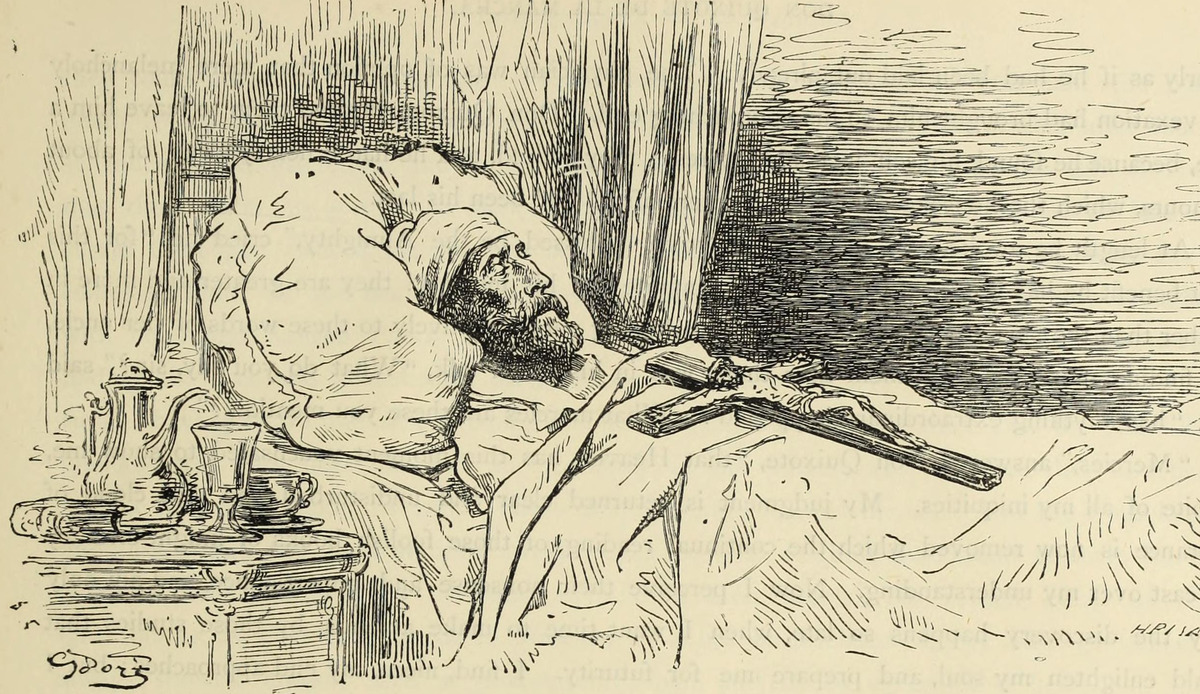
Alonso Quijano, sane again, asks Sancho to forgive him for making him mad. Sancho begs him not to die, offers to take the blame for his defeat and suggests they go off as shepherds. His master answers with a proverb about birds' nests and the most famous sentence of the ending. This unit is about the imperative of pleading, and about the preterite of ser.
The passage, exactly as Cervantes wrote it
Miguel de Cervantes, Part Two, Chapter 74. Unadapted.
Perdóname, amigo, de la ocasión que te he dado de parecer loco como yo, haciéndote caer en el error en que yo he caído, de que hubo y hay caballeros andantes en el mundo. — ¡Ay! —respondió Sancho, llorando—: no se muera vuestra merced, señor mío, sino tome mi consejo y viva muchos años, porque la mayor locura que puede hacer un hombre en esta vida es dejarse morir, sin más ni más, sin que nadie le mate, ni otras manos le acaben que las de la melancolía. Mire no sea perezoso, sino levántese desa cama, y vámonos al campo vestidos de pastores, como tenemos concertado: quizá tras de alguna mata hallaremos a la señora doña Dulcinea desencantada, que no haya más que ver. Si es que se muere de pesar de verse vencido, écheme a mí la culpa, diciendo que por haber yo cinchado mal a Rocinante le derribaron; cuanto más, que vuestra merced habrá visto en sus libros de caballerías ser cosa ordinaria derribarse unos caballeros a otros, y el que es vencido hoy ser vencedor mañana. — Así es —dijo Sansón—, y el buen Sancho Panza está muy en la verdad destos casos. — Señores —dijo don Quijote—, vámonos poco a poco, pues ya en los nidos de antaño no hay pájaros hogaño: yo fui loco, y ya soy cuerdo; fui don Quijote de la Mancha, y soy agora, como he dicho, Alonso Quijano el Bueno. Pueda con vuestras mercedes mi arrepentimiento y mi verdad volverme a la estimación que de mí se tenía, y prosiga adelante el señor escribano.
Forgive me, friend, for the occasion I gave you to seem as mad as I am, making you fall into the error I fell into, that there were and are knights errant in the world. Oh! answered Sancho, weeping. Do not die, your worship, sir, but take my advice and live many years, because the greatest madness a man can commit in this life is to let himself die, just like that, with no one killing him and no hand finishing him off but melancholy's. Look, do not be lazy, get up out of that bed and let us go off to the fields dressed as shepherds, as we agreed. Maybe behind some bush we will find the lady doña Dulcinea disenchanted, and there will be nothing more to wish for. If you are dying of grief at being defeated, put the blame on me and say they knocked you down because I girthed Rocinante badly. What is more, your worship will have seen in your books of chivalry that it is an ordinary thing for knights to unhorse one another, and for the man beaten today to be the winner tomorrow. That is so, said Sansón, and good Sancho Panza has the truth of these matters. Gentlemen, said don Quixote, let us go slowly, for there are no birds this year in last year's nests. I was mad, and now I am sane. I was don Quixote de la Mancha, and now I am, as I have said, Alonso Quijano the Good. May my repentance and my truth restore me to the esteem you once had for me, and let the notary go on.
The same thing in Spanish as it is written today
Read the two side by side. What has changed between them is the syllabus of this level.
Perdóname, amigo, por haberte dado ocasión de parecer tan loco como yo, haciéndote caer en el error en que yo he caído, de que hubo y hay caballeros andantes en el mundo. ¡Ay!, respondió Sancho llorando, no se muera vuestra merced, señor mío, sino hágame caso y viva muchos años, porque la mayor locura que puede hacer un hombre en esta vida es dejarse morir, sin más, sin que nadie lo mate ni lo acaben otras manos que las de la tristeza. Mire, no sea perezoso, levántese de esa cama y vámonos al campo vestidos de pastores, como habíamos quedado: quizá detrás de alguna mata encontremos a la señora doña Dulcinea desencantada, y no haya más que pedir. Si se muere de pena por verse vencido, écheme la culpa a mí, diciendo que lo derribaron porque yo até mal la cincha de Rocinante. Además, vuestra merced habrá visto en sus libros de caballerías que es cosa corriente que unos caballeros derriben a otros, y que el vencido de hoy sea el vencedor de mañana. Así es, dijo Sansón, y el buen Sancho Panza tiene toda la razón en esto. Señores, dijo don Quijote, vayamos poco a poco, que en los nidos de antaño no hay pájaros hogaño. Yo fui loco, y ya soy cuerdo. Fui don Quijote de la Mancha, y ahora soy, como he dicho, Alonso Quijano el Bueno. Que mi arrepentimiento y mi sinceridad me devuelvan la estima que me teníais, y que siga adelante el señor escribano.
What changed, form by form
| In the text | Today | Why it matters |
|---|---|---|
| Perdóname de | perdóname por | Perdonar de, where today it is perdonar por. |
| no se muera vuestra merced | no se muera usted | A negative command to vuestra merced, in the third person present subjunctive. It is still how one pleads with usted. |
| sin más ni más | sin más | Just like that, for no reason. Still said in both forms. |
| Mire no sea perezoso | mire, no sea perezoso | Mirar que with the que left out, as a warning. |
| como tenemos concertado | como habíamos quedado | Tener plus participle for a plan agreed and still in force. |
| que no haya más que ver | y no haya más que pedir | And that is all there is to it. A spoken formula. |
| cinchado | atado la cincha | Cinchar, to tighten the girth. A stable word in a deathbed speech. |
| en los nidos de antaño no hay pájaros hogaño | lo mismo hoy | Antaño is last year and hogaño this year. A proverb still quoted: what is gone is gone. |
| fui loco, y ya soy cuerdo | lo mismo hoy | Ser in the preterite for a state that is over. Fui loco, I was mad and am no longer. |
| agora | ahora | The older form. Don Quixote uses it to the end. |
| Pueda con vuestras mercedes | que consiga con ustedes | Poder con alguien, to prevail with someone. A wish in the subjunctive without que. |
The syntax
Sancho's plea is a string of commands in the third person subjunctive, no se muera, tome, viva, mire, levántese, écheme, the forms that go with vuestra merced, softened by quizá and by a joke about the girth strap. Don Quixote answers with the shortest sentences in the whole book. Fui loco, soy cuerdo, fui don Quijote, soy Alonso Quijano: the preterite of ser closes one identity and the present opens another, and there is nothing in between.
What a Spanish reader hears
Sancho, who spent the whole book being the sensible one, now begs his master to go on being mad, because the madness was their life together, and he offers to lie about Rocinante's girth to make it easier. It is the most tender moment in the book, and it comes from the man who has been beaten, tossed in a blanket and mocked for a thousand pages. Don Quixote's answer is kind and final. The proverb about last year's nests means the season is over, and he goes straight back to dictating his will.
Where the course prepares you for this
- The whole of B2, and the whole course behind itLesson 90The end of the story