C2 · Part Two, Chapter 41
Clavileño: what Sancho saw from the sky
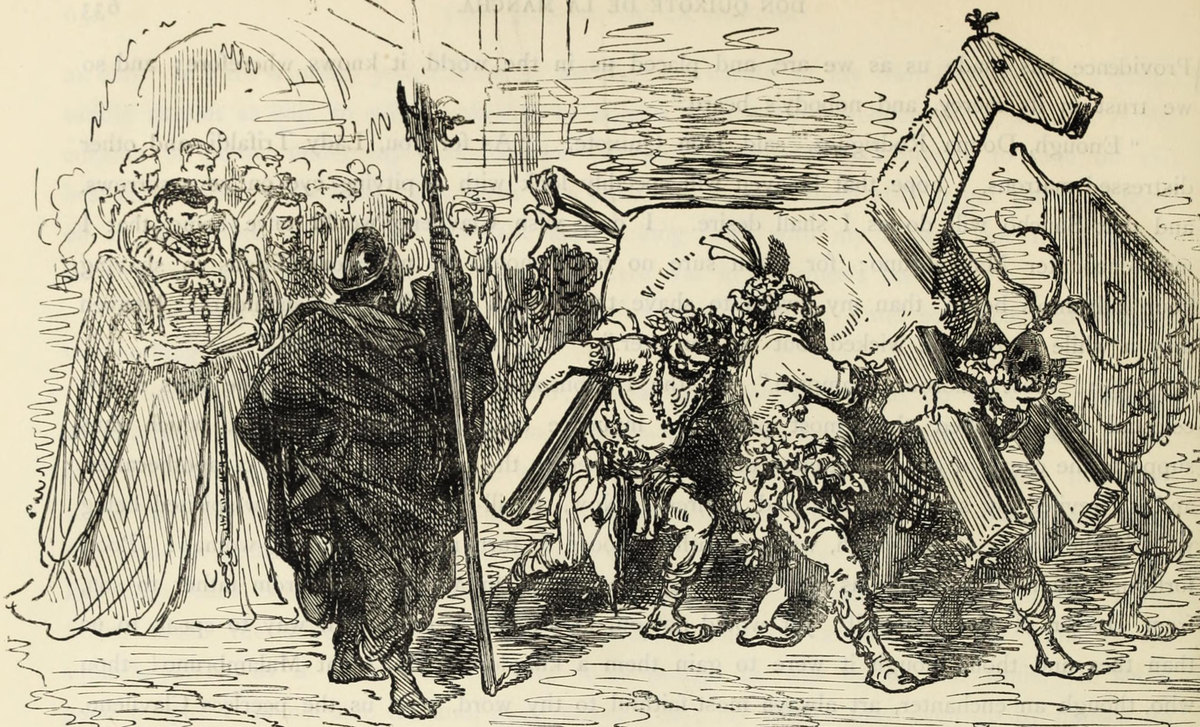
Blindfolded on a wooden horse in the duke's garden, don Quixote and Sancho are told they are flying to a distant kingdom. Afterwards Sancho describes what he saw when he peeked, and the duchess catches him in a contradiction. His answer is a small masterpiece of reasoning from the premises of someone else's joke.
The passage, exactly as Cervantes wrote it
Miguel de Cervantes, Part Two, Chapter 41. Unadapted.
Yo, señora, sentí que íbamos, según mi señor me dijo, volando por la región del fuego, y quise descubrirme un poco los ojos, pero mi amo, a quien pedí licencia para descubrirme, no la consintió; mas yo, que tengo no sé qué briznas de curioso y de desear saber lo que se me estorba y impide, bonitamente y sin que nadie lo viese, por junto a las narices aparté tanto cuanto el pañizuelo que me tapaba los ojos, y por allí miré hacia la tierra, y parecióme que toda ella no era mayor que un grano de mostaza, y los hombres que andaban sobre ella, poco mayores que avellanas; porque se vea cuán altos debíamos de ir entonces. A esto dijo la duquesa: — Sancho amigo, mirad lo que decís, que, a lo que parece, vos no vistes la tierra, sino los hombres que andaban sobre ella; y está claro que si la tierra os pareció como un grano de mostaza, y cada hombre como una avellana, un hombre solo había de cubrir toda la tierra. — Así es verdad —respondió Sancho—, pero, con todo eso, la descubrí por un ladito, y la vi toda. — Mirad, Sancho —dijo la duquesa—, que por un ladito no se vee el todo de lo que se mira. — Yo no sé esas miradas —replicó Sancho—: sólo sé que será bien que vuestra señoría entienda que, pues volábamos por encantamento, por encantamento podía yo ver toda la tierra y todos los hombres por doquiera que los mirara
I, my lady, felt that we were going, as my master told me, flying through the region of fire, and I wanted to uncover my eyes a little, but my master, whom I asked for permission to uncover them, would not allow it. But I, who have some little bits of curiosity in me and of wanting to know what is kept from me and forbidden, quietly and without anyone seeing, moved the handkerchief that covered my eyes just a tiny bit near my nose, and looked down at the earth through there, and it seemed to me that the whole of it was no bigger than a grain of mustard, and the men walking on it little bigger than hazelnuts, so you can see how high we must have been then. To this the duchess said: Sancho my friend, mind what you are saying, for it seems that you did not see the earth, but the men walking on it, and it is clear that if the earth looked to you like a grain of mustard and each man like a hazelnut, a single man would have covered the whole earth. That is true, answered Sancho, but all the same I uncovered it by one little side and I saw all of it. Mind, Sancho, said the duchess, that by one little side you do not see the whole of what you look at. I know nothing about those lookings, replied Sancho. All I know is that it would be as well for your ladyship to understand that since we were flying by enchantment, by enchantment I could see the whole earth and all the men wherever I looked at them
The same thing in Spanish as it is written today
Read the two side by side. What has changed between them is the syllabus of this level.
Yo, señora, sentí que íbamos, según me dijo mi señor, volando por la región del fuego, y quise destaparme un poco los ojos, pero mi amo, a quien le pedí permiso para destapármelos, no me dejó. Pero yo, que tengo no sé qué pizca de curioso y de querer saber lo que se me prohíbe, disimuladamente y sin que nadie lo viera, aparté un poquito, junto a la nariz, el pañuelo que me tapaba los ojos, y por allí miré hacia la tierra, y me pareció que toda ella no era más grande que un grano de mostaza, y los hombres que andaban por ella, poco más grandes que avellanas, para que se vea lo alto que debíamos de ir entonces. A esto dijo la duquesa: Sancho, amigo, mirad lo que decís, que, por lo que parece, vos no visteis la tierra, sino los hombres que andaban por ella, y está claro que si la tierra os pareció un grano de mostaza, y cada hombre una avellana, un solo hombre tenía que cubrir toda la tierra. Es verdad, respondió Sancho, pero aun así la destapé por un ladito y la vi entera. Mirad, Sancho, dijo la duquesa, que por un ladito no se ve todo lo que se mira. Yo no sé de esas miradas, replicó Sancho. Solo sé que conviene que vuestra señoría entienda que, como volábamos por encantamiento, por encantamiento podía yo ver toda la tierra y a todos los hombres por dondequiera que los mirara
What changed, form by form
| In the text | Today | Why it matters |
|---|---|---|
| briznas de curioso | pizca de curioso | A brizna is a blade of grass or a wisp. Tener briznas de, to have a touch of something. |
| lo que se me estorba y impide | lo que se me prohíbe | Two verbs for the same thing, a legal habit even in Sancho's mouth. |
| bonitamente | disimuladamente | Bonito meaning neatly, quietly, not prettily. |
| tanto cuanto | un poquito | Tanto cuanto as an adverb meaning a little. Gone. |
| pañizuelo | pañuelo | An older diminutive of paño. |
| porque se vea | para que se vea | Porque with the subjunctive for purpose. |
| vos no vistes | vos no visteis | The duchess speaks to Sancho as vos, from above, with the older preterite ending. |
| por un ladito | lo mismo hoy | The diminutive does the arguing. It was only a little side, so it hardly counts. |
| esas miradas | esas miradas | A noun made out of mirar on the spot. Sancho turns her argument into a thing and dismisses it. |
| por encantamento | por encantamiento | The older form of the word, and the premise that wins the argument. |
The syntax
Sancho's first speech is a long narrative with a comic structure: yo, que tengo no sé qué briznas de curioso, followed by three adverbial phrases before the verb finally arrives, bonitamente, sin que nadie lo viese, por junto a las narices. The duchess then argues like a logician, si ... y cada hombre ... un hombre solo había de cubrir. Sancho answers with the same shape turned round: pues volábamos por encantamento, por encantamento podía yo ver. The repetition is the argument. Once the premise is enchantment, anything follows.
What a Spanish reader hears
The duchess has set up the whole flight and is enjoying catching Sancho out, and Sancho wins the argument anyway, by turning her own fiction against her. She told him they were flying by enchantment, so he saw by enchantment. It is exactly the reasoning don Quixote uses about his enchanters, and Sancho has learnt it. A few lines later he claims to have played with the goats of the Pleiades, and don Quixote whispers to him that if he wants to be believed about the sky, he had better believe his master about the cave of Montesinos.
Where the course prepares you for this
- Will have happened and would have happenedLesson 77The flight of Clavileño