C2 · Part Two, Chapter 38
The countess Trifaldi and the plague of superlatives
A bearded duenna, sent in by the duke and duchess as part of an elaborate hoax, addresses the court in a string of superlatives, and then starts adding -ísimo to words that cannot take it. Sancho answers in kind and goes further. This unit is about the Spanish superlative, and about what happens when a suffix turns into a tic.
The passage, exactly as Cervantes wrote it
Miguel de Cervantes, Part Two, Chapter 38. Unadapted.
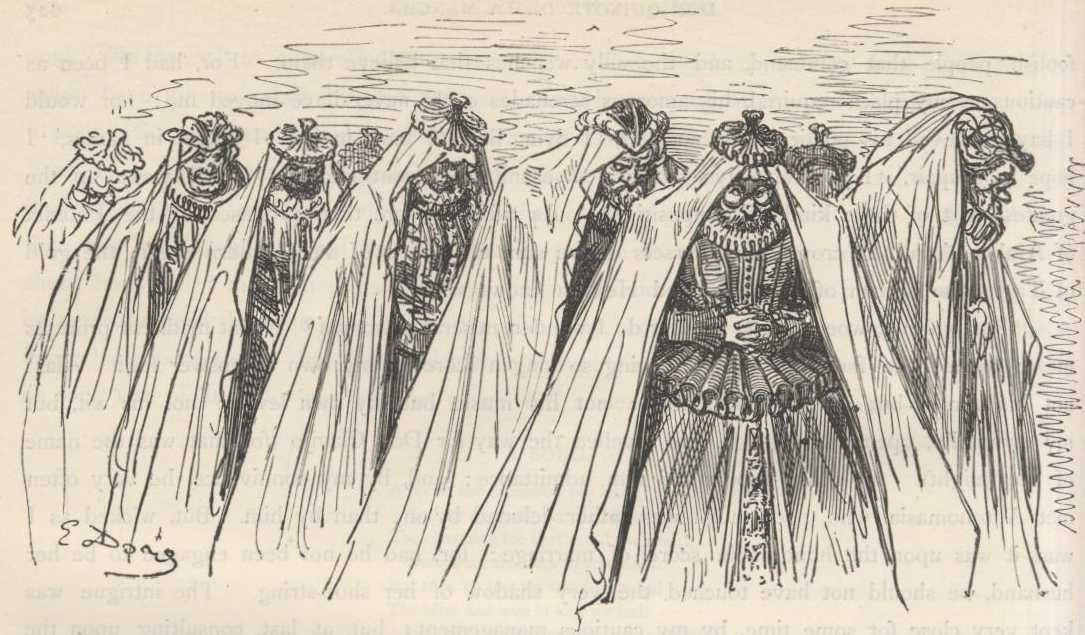
Confiada estoy, señor poderosísimo, hermosísima señora y discretísimos circunstantes, que ha de hallar mi cuitísima en vuestros valerosísimos pechos acogimiento no menos plácido que generoso y doloroso, porque ella es tal, que es bastante a enternecer los mármoles, y a ablandar los diamantes, y a molificar los aceros de los más endurecidos corazones del mundo; pero, antes que salga a la plaza de vuestros oídos, por no decir orejas, quisiera que me hicieran sabidora si está en este gremio, corro y compañía el acendradísimo caballero don Quijote de la Manchísima y su escuderísimo Panza. — El Panza —antes que otro respondiese, dijo Sancho— aquí esta, y el don Quijotísimo asimismo; y así, podréis, dolorosísima dueñísima, decir lo que quisieridísimis, que todos estamos prontos y aparejadísimos a ser vuestros servidorísimos.
I am confident, most mighty lord, most beautiful lady and most discreet bystanders, that my sorrowissima will find in your most valiant breasts a welcome no less gentle than generous and grieving, for it is such that it is enough to soften marble, melt diamonds and mollify the steel of the hardest hearts in the world. But before it comes out into the square of your hearing, not to say your ears, I should like to be informed whether in this company, circle and gathering there are the most refined knight don Quixote of La Manchissima and his squirissimo Panza. The Panza, said Sancho before anyone else could answer, is here, and the don Quixotissimo likewise, and so, most doleful duennissima, you may say whatever you pleasissimo, for we are all readyissimo and preparedissimo to be your servantissimos.
The same thing in Spanish as it is written today
Read the two side by side. What has changed between them is the syllabus of this level.
Confío, poderosísimo señor, hermosísima señora y discretísimos presentes, en que mi cuitísima encontrará en vuestros valerosísimos pechos una acogida no menos amable que generosa y compasiva, porque es tal que basta para enternecer el mármol, ablandar los diamantes y suavizar el acero de los corazones más duros del mundo. Pero antes de que salga a la plaza de vuestros oídos, por no decir orejas, quisiera que me informaran de si está en esta reunión, corro y compañía el purísimo caballero don Quijote de la Manchísima y su escuderísimo Panza. El Panza, dijo Sancho antes de que nadie respondiera, aquí está, y el don Quijotísimo también, así que podéis, dolorosísima dueñísima, decir lo que queráis, que todos estamos listos y preparadísimos para ser vuestros servidorísimos.
What changed, form by form
| In the text | Today | Why it matters |
|---|---|---|
| poderosísimo, hermosísima, discretísimos | lo mismo hoy | The absolute superlative in -ísimo, correct and normal. So far the duenna is only being very polite. |
| cuitísima | mi gran cuita | Here it breaks. Cuita is a noun, and nouns do not take -ísimo. |
| plácido que generoso y doloroso | amable, generosa y compasiva | Doloroso meaning grieving with her, not painful. The adjectives are chosen for their sound. |
| molificar | ablandar, suavizar | A Latinism already pompous in 1615. |
| por no decir orejas | lo mismo hoy | Oídos is the polite word for ears and orejas the plain one. She corrects herself into the vulgar word, which is the joke. |
| me hicieran sabidora | me informaran | Hacer sabidor, to inform. Legal and old fashioned. |
| gremio, corro y compañía | reunión, corro y compañía | Three nouns for the same thing. Padding in the grand manner. |
| acendradísimo | purísimo | Acendrado means refined, purified. A real adjective, correctly in the superlative. |
| la Manchísima | la Mancha | A place name in -ísima. By now the suffix is on everything. |
| escuderísimo | escudero | A noun in -ísimo again. Sancho is taking notes. |
| quisieridísimis | queráis | Sancho's invention: a verb, in a tense that does not exist, with -ísimo in the middle. It means nothing and everyone understands it. |
| servidorísimos | servidores | A last noun with the suffix, from the squire who has learnt the game. |
The syntax
The duenna's sentence is built correctly. It has a main verb, confiada estoy, a que clause with a future, ha de hallar, a comparison, no menos plácido que generoso, and a restriction with antes que and a subjunctive, quisiera que me hicieran. The syntax is courtly and flawless. What goes wrong is the morphology: -ísimo moves from adjectives, where it belongs, onto nouns, then onto a place name, and by the end of Sancho's reply onto a verb.
What a Spanish reader hears
The whole scene is a hoax staged by the duke's steward, who plays the countess, and the superlatives are part of the act. They parody the style of the books of chivalry, where every lady is hermosísima and every knight valerosísimo. Sancho, who has understood nothing of the plot, has understood the style perfectly, and his reply is the best joke in the chapter: quisieridísimis is not Spanish, and no Spanish speaker has ever failed to understand it.
Where the course prepares you for this
- Old Spanish and how to parody itLesson 76The Countess Trifaldi’s beard