C1 · Part One, Chapter 37
Arms and letters: don Quixote argues at dinner
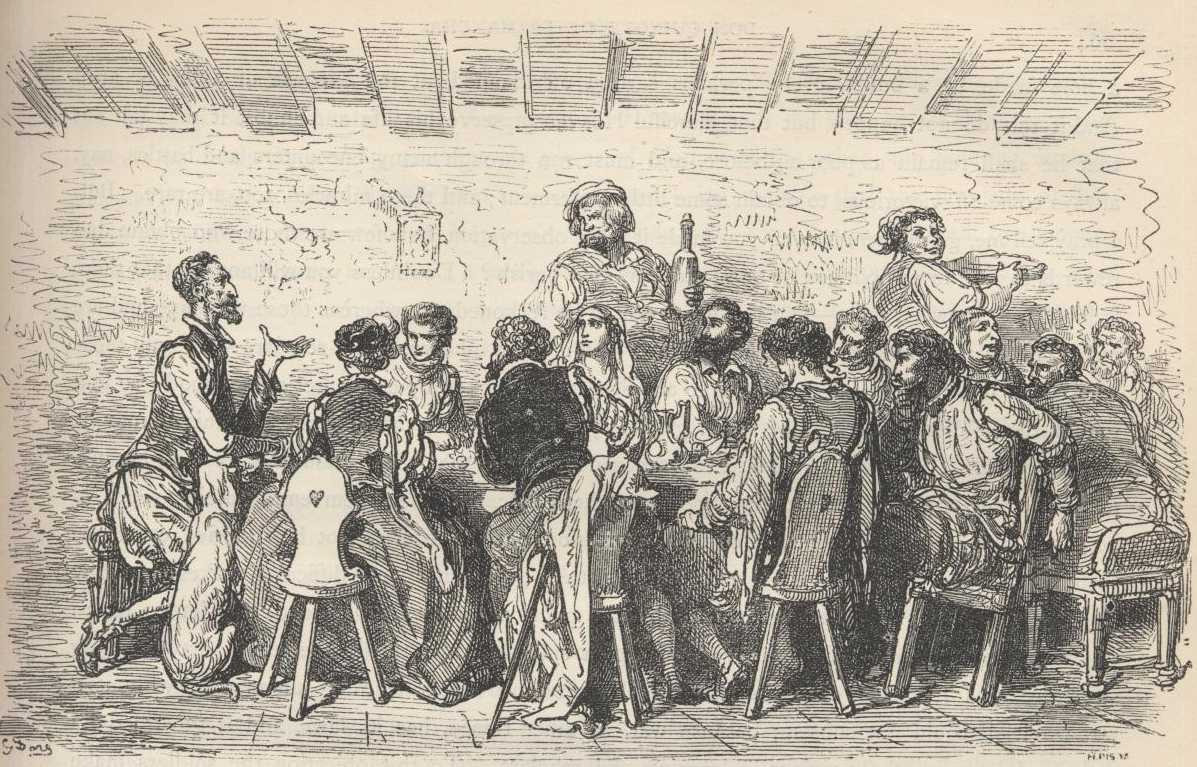
At a dinner at the inn, don Quixote rises and delivers a set piece on whether soldiers or scholars deserve more honour. It was a question debated in every Renaissance school, and he argues it like a trained rhetorician. This unit is about the machinery of formal debate in Spanish: the stacked como si, the subjunctive of challenge, and the period that refutes an objection before anyone makes it.
The passage, exactly as Cervantes wrote it
Miguel de Cervantes, Part One, Chapter 37. Unadapted.
Quítenseme delante los que dijeren que las letras hacen ventaja a las armas, que les diré, y sean quien se fueren, que no saben lo que dicen. Porque la razón que los tales suelen decir, y a lo que ellos más se atienen, es que los trabajos del espíritu exceden a los del cuerpo, y que las armas sólo con el cuerpo se ejercitan, como si fuese su ejercicio oficio de ganapanes, para el cual no es menester más de buenas fuerzas; o como si en esto que llamamos armas los que las profesamos no se encerrasen los actos de la fortaleza, los cuales piden para ejecutallos mucho entendimiento; o como si no trabajase el ánimo del guerrero que tiene a su cargo un ejército, o la defensa de una ciudad sitiada, así con el espíritu como con el cuerpo.
Out of my way with those who say that letters have the advantage over arms, for I will tell them, whoever they may be, that they do not know what they are saying. Because the reason such people usually give, and the one they rely on most, is that the labours of the spirit exceed those of the body, and that arms are exercised with the body alone, as if their exercise were the trade of porters, for which nothing more is needed than good strength. Or as if in what we call arms, those of us who profess them did not include the acts of fortitude, which need a great deal of understanding to carry out. Or as if the mind of the warrior who has an army in his charge, or the defence of a besieged city, did not labour with the spirit as well as with the body.
The same thing in Spanish as it is written today
Read the two side by side. What has changed between them is the syllabus of this level.
Que se aparten de mi vista los que digan que las letras son superiores a las armas, que les diré, sean quienes sean, que no saben lo que dicen. Porque la razón que suelen dar, y a la que más se aferran, es que los trabajos del espíritu superan a los del cuerpo, y que las armas solo se ejercitan con el cuerpo, como si fueran un oficio de mozos de cuerda, para el que no hace falta más que fuerza. O como si en lo que llamamos armas no entraran, para los que nos dedicamos a ellas, los actos de valor, que piden mucha inteligencia para llevarlos a cabo. O como si no trabajara con la mente, además de con el cuerpo, el guerrero que tiene a su cargo un ejército o la defensa de una ciudad sitiada.
What changed, form by form
| In the text | Today | Why it matters |
|---|---|---|
| Quítenseme delante | que se aparten de mi vista | A third person command with two pronouns, se and me, both on the verb. Get yourselves out of my way. |
| los que dijeren | los que digan | Future subjunctive in a relative clause about anyone who might say it. Today the present subjunctive. |
| hacen ventaja a | son superiores a | Hacer ventaja, to have the edge over. Still understood. |
| sean quien se fueren | sean quienes sean | Quien for a plural, and a doubled subjunctive with the future form: whoever they turn out to be. |
| los tales | esos | Tal with an article, meaning the people just mentioned. Legal Spanish still uses it. |
| ganapanes | mozos de cuerda | Men who earned their bread carrying loads. Now an insult for a lout. |
| no es menester más de | no hace falta más que | Menester, need. And más de where today más que is required. |
| ejecutallos | ejecutarlos | The r of the infinitive assimilated to the l of the pronoun. Found all through the book. |
| así con el espíritu como con el cuerpo | tanto con la mente como con el cuerpo | Así ... como for both ... and. Today tanto ... como. |
The syntax
The paragraph refutes its opponents before they have spoken. It states their argument once, los trabajos del espíritu exceden a los del cuerpo, and then knocks it down three times with the same frame, como si, each followed by an imperfect subjunctive: como si fuese, como si no se encerrasen, como si no trabajase. The repetition is the rhetorical point. By the third como si the listener already knows the shape of the answer.
What a Spanish reader hears
Everyone at the table agrees that this is not the speech of a madman. It is sensible, well built and learned, and for a few pages don Quixote is the most articulate man in the book. Cervantes had been a soldier, had lost the use of his left hand at Lepanto and had spent five years as a captive in Algiers, and in the next chapter the speech describes the soldier's poverty with a precision no book of chivalry ever had. For once the madman is talking about something the author knew at first hand.
Where the course prepares you for this
- Discourse markers and the formal registerLesson 49Arms and letters