Level B1 · Chapter 44
The Favour the Princess Asks
Dorotea kneels in front of Don Quixote and asks him for a favour without saying what it is. With that promise the knight can no longer stop along the road, and the road runs through his own village.
What you will learn
- Ask, beg and order somebody to do something using que and the subjunctive.
- Tell the decir that reports apart from the decir that commands.
- Recognise when an infinitive can replace que altogether.
Before you read
In the last lesson people wanted things. Here almost nobody merely wants: they ask, they beg, they order and they forbid, and every one of those is an attempt to make somebody else act. The verb form is exactly the one you learned in lesson 43. What changes is the reason it appears, and the list of verbs that set it off is much longer.The story in easy Spanish
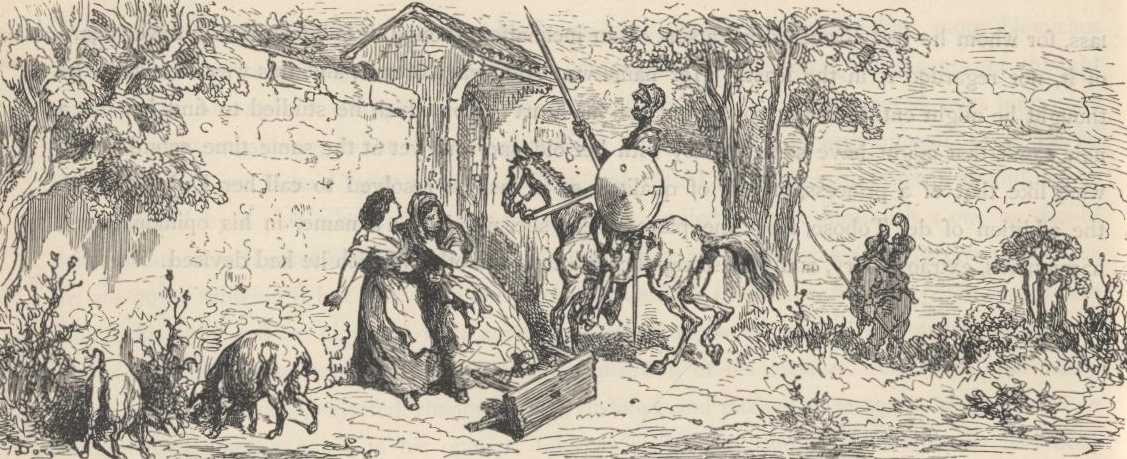
Dorotea, vestida de princesa, llegó al lugar donde estaba don Quijote.
Dorotea, dressed as a princess, arrived at the place where Don Quixote was.
El vestido era rico y la mula caminaba muy despacio, como en los libros.
The dress was a fine one and the mule walked very slowly, exactly as in the books.
Antes de decir una palabra, se bajó de la mula y se arrodilló.
Before saying a word, she got down from the mule and knelt.
«No me levantaré de aquí hasta que vuestra grandeza me prometa un don», dijo con voz firme y clara.
"I shall not rise from here until your greatness promises me a favour," she said in a firm, clear voice.
Don Quijote la mandó levantarse enseguida, muy alarmado, porque ninguna doncella debía estar de rodillas ante un caballero andante.
Don Quixote told her to stand up at once, thoroughly alarmed, because no maiden should be on her knees before a knight errant.
«Le pido que hable sin miedo y sin prisa», dijo él.
"I ask you to speak without fear and without hurry," he said.
«Y le ruego que me pida todo lo que necesite.»
"And I beg you to ask me for anything you need."
Entonces Dorotea contó su historia con muchos detalles inventados, y todos la escucharon en silencio.
Then Dorotea told her story, with a great many invented details, and everyone listened to her in silence.
Un gigante llamado Pandafilando de la Fosca Vista le había quitado el reino.
A giant called Pandafilando of the Gloomy Eye had taken her kingdom from her.
«Pido que un caballero venga conmigo y lo mate», dijo.
"I ask that a knight come with me and kill him," she said.
«Solo le pido una cosa más», añadió la princesa.
"I ask only one more thing," the princess added.
«Le pido que no se meta en ninguna otra aventura hasta llegar a mi reino.»
"I ask you to take on no other adventure until we reach my kingdom."
Era lo que el cura le había mandado decir, porque con esa promesa don Quijote no podría detenerse.
It was what the priest had told her to say, because with that promise Don Quixote would not be able to stop.
Y el camino, casualmente, pasaba por su propio pueblo.
And the road, as it happened, ran through his own village.
El caballero aceptó la petición muy serio y sin dudar nada.
The knight accepted the request, very solemn and without a moment of doubt.
«Sancho, te ordeno que prepares a Rocinante ahora mismo y te pido que limpies la armadura antes de salir.»
"Sancho, I order you to get Rocinante ready this minute, and I ask you to clean the armour before we set off."
Sancho estaba encantado con aquella princesa y con su vestido.
Sancho was delighted with that princess and with her dress.
Si su amo mataba al gigante, se casaría con ella.
If his master killed the giant, he would marry her.
Y entonces él sería gobernador de una provincia entera.
And then he himself would be governor of an entire province.
El barbero, detrás, se tocaba la barba, porque tenía miedo de perder la cola de buey delante de todos.
The barber, behind them, kept touching his beard, because he was afraid of losing the ox tail in front of everyone.
«No mires a Sancho», le susurró el cura, «y te ruego que aguantes la risa hasta la venta.»
"Do not look at Sancho," the priest whispered to him, "and I beg you to hold in your laughter until the inn."
Nadie le preguntó a Dorotea dónde estaba Micomicón, porque el reino ya existía en la cabeza del caballero.
Nobody asked Dorotea where Micomicón actually was, because the kingdom already existed inside the knight’s head.
La penitencia había terminado y el disfraz empezaba a funcionar.
The penance was over and the disguise was beginning to work.
Vocabulary
Asking and ordering
- pedir que
- to ask somebody to
- rogar que
- to beg somebody to
- ordenar que
- to order somebody to
- mandar que
- to command that
- aconsejar que
- to advise somebody to
- prohibir que
- to forbid somebody to
- permitir que
- to allow somebody to
- exigir que
- to demand that
The scene of the request
- el don
- the favour, the boon
- la petición
- the request
- arrodillarse
- to kneel
- de rodillas
- on one’s knees
- la grandeza
- the greatness
- la doncella
- the maiden
- el gigante espantoso
- the frightful giant
What Sancho is hoping for
- el gobernador
- the governor
- la provincia
- the province
- la ínsula
- the isle
- casarse con
- to marry somebody
- el premio
- the reward
- detenerse
- to stop
- la prisa
- the hurry
Asking, begging, ordering: the subjunctive of influence
Le pido que hable sin miedo y sin prisa.
Te ordeno que prepares a Rocinante ahora mismo.
Te ruego que aguantes la risa hasta llegar a la venta.
Last lesson the subjunctive appeared because somebody wanted something. This lesson it appears because somebody is leaning on somebody else. Grammarians call this the subjunctive of influence, and it covers everything from a whispered plea to a direct order. The machinery is identical to lesson 43. What is new is how many verbs turn it on, and one nasty two faced verb at the end.
1. The verbs of influence
Every one of these describes one person trying to move another, and every one of them takes que plus a subjunctive when the two people are different.
| verb | English | from this lesson |
|---|---|---|
| pedir que | to ask somebody to | Le pido que hable sin miedo. |
| rogar que | to beg somebody to | Te ruego que aguantes la risa. |
| ordenar que | to order somebody to | Te ordeno que prepares a Rocinante. |
| mandar que | to command that | El cura manda que salgamos ya. |
| aconsejar que | to advise somebody to | Le aconsejo que no mire a Sancho. |
| recomendar que | to recommend that | Le recomiendo que descanse. |
| prohibir que | to forbid somebody to | Le prohíbo que entre aquí. |
| permitir que | to allow somebody to | No permito que nadie se ría. |
| exigir que | to demand that | Exijo que me devuelvan mi reino. |
| hacer que | to make somebody | El miedo hace que hable despacio. |
Notice pedir in particular, because it is a trap in the other direction. Pedir means to ask for something, to request. The verb for asking a question is preguntar, and preguntar never takes the subjunctive, because a question does not push anybody to do anything.
2. Decir has two faces, and they take different moods
This is the single most useful thing in the lesson. Decir que can report a fact or issue an order, and Spanish keeps them apart with the mood alone.
| what it does | mood | example | English |
|---|---|---|---|
| reports | indicative | Dice que el gigante vive en Micomicón. | He says the giant lives in Micomicón. |
| orders | subjunctive | Dice que vayas a Micomicón. | He says you are to go to Micomicón. |
| reports | indicative | El cura dice que Dorotea es princesa. | The priest says Dorotea is a princess. |
| orders | subjunctive | El cura dice que Dorotea sea princesa. | The priest says Dorotea is to be the princess. |
The same split runs through insistir en que and escribir que. Change the mood and you change the message from news into an instruction, with no other word touched.
3. Five verbs let you off with an infinitive
Mandar, dejar, permitir, prohibir and hacer allow a shortcut, and Cervantes uses it in this very scene: Don Quijote la mandó levantarse instead of mandó que se levantara. Both are correct and the short one is more common in speech.
| with que | with an infinitive |
|---|---|
| Mandó que se levantara. | La mandó levantarse. |
| No permitió que entráramos. | No nos permitió entrar. |
| Le prohibió que saliera. | Le prohibió salir. |
The rest of the list has no shortcut. Pedir, rogar, ordenar, aconsejar, exigir and querer need the full que and the subjunctive when a second person is involved. This is the point where English speakers reach for le pido hablar, and it is not Spanish.
4. Same person, no que, as always
The rule from lesson 43 still holds and always will. Pido hablar con el caballero means I want to do the talking. Pido que hable el caballero means I want him to. One que and one vowel decide who opens their mouth.
The blank favour: promising before you know what
The scene rests on a piece of chivalric etiquette called el don en blanco, the blank favour. A lady kneels, refuses to rise, and asks the knight to grant her a boon without telling him what it is. He grants it. Only then does she say what she wants, and by the rules of his world he is now bound to it, whatever it turns out to be. It is a courteous trap and it appears in romance after romance, which is precisely why Dorotea can operate it without a rehearsal. She has read the same shelf of books that drove Don Quixote mad, and she knows the etiquette better than the priest who invented the plan.
The giant is named with the same care. Pandafilando de la Fosca Vista, Pandafilando of the Gloomy Eye, is a name assembled out of the sound of the genre: too many syllables, an epithet about his squint, a whiff of Italian. Cervantes even has Dorotea explain that the giant’s eyes are crossed, and that he does it on purpose to frighten people. Nobody at any point asks how a kingdom in Guinea comes to have a giant with an Italian name, because the only person entitled to ask is delighted with the whole arrangement.
Sancho’s reaction is the part that will grow into the rest of the book. He hears governor and province and starts calculating. Readers in 1605 did not find this as absurd as it sounds now: Spain was handing out governorships across an empire, and a man of no birth who attached himself to the right expedition could genuinely come home titled. Sancho is not dreaming of magic. He is dreaming of the colonial civil service. Six hundred pages later Cervantes will actually give it to him, and the joke turns out to have a soul in it.
Cervantes in the original · «De aquí no me levantaré, ¡oh valeroso y esforzado…»
De aquí no me levantaré, ¡oh valeroso y esforzado caballero!, fasta que la vuestra bondad y cortesía me otorgue un don
I shall not rise from here, O valiant and mighty knight, until your goodness and courtesy grant me a favour.
The whole blank favour formula in one sentence, and it happens to hand you the grammar point on a plate. The verb otorgue is a present subjunctive, and it is there for exactly the reason this lesson describes: Dorotea is not reporting anything, she is pushing. Compare it with the modern Spanish you have been writing in the exercises and the only difference is the vocabulary. The form has not moved in four hundred years. Three details of the old language are worth noticing. Fasta is hasta in the deliberately archaic spelling of the chivalric romances, keeping an initial f that Spanish had already softened to a silent h, the same f you met in ferido for herido in Don Quixote’s love letter in lesson 41. La vuestra bondad puts an article in front of a possessive, which was normal then and sounds impossibly old now. And the exclamation dropped into the middle of the sentence, oh valeroso y esforzado caballero, is pure romance rhetoric. Dorotea is not talking like a woman in trouble. She is talking like a book, on purpose, to a man who only listens to books.