C2 · Part Two, Chapter 64
Defeat on the beach: Dulcinea is still the most beautiful
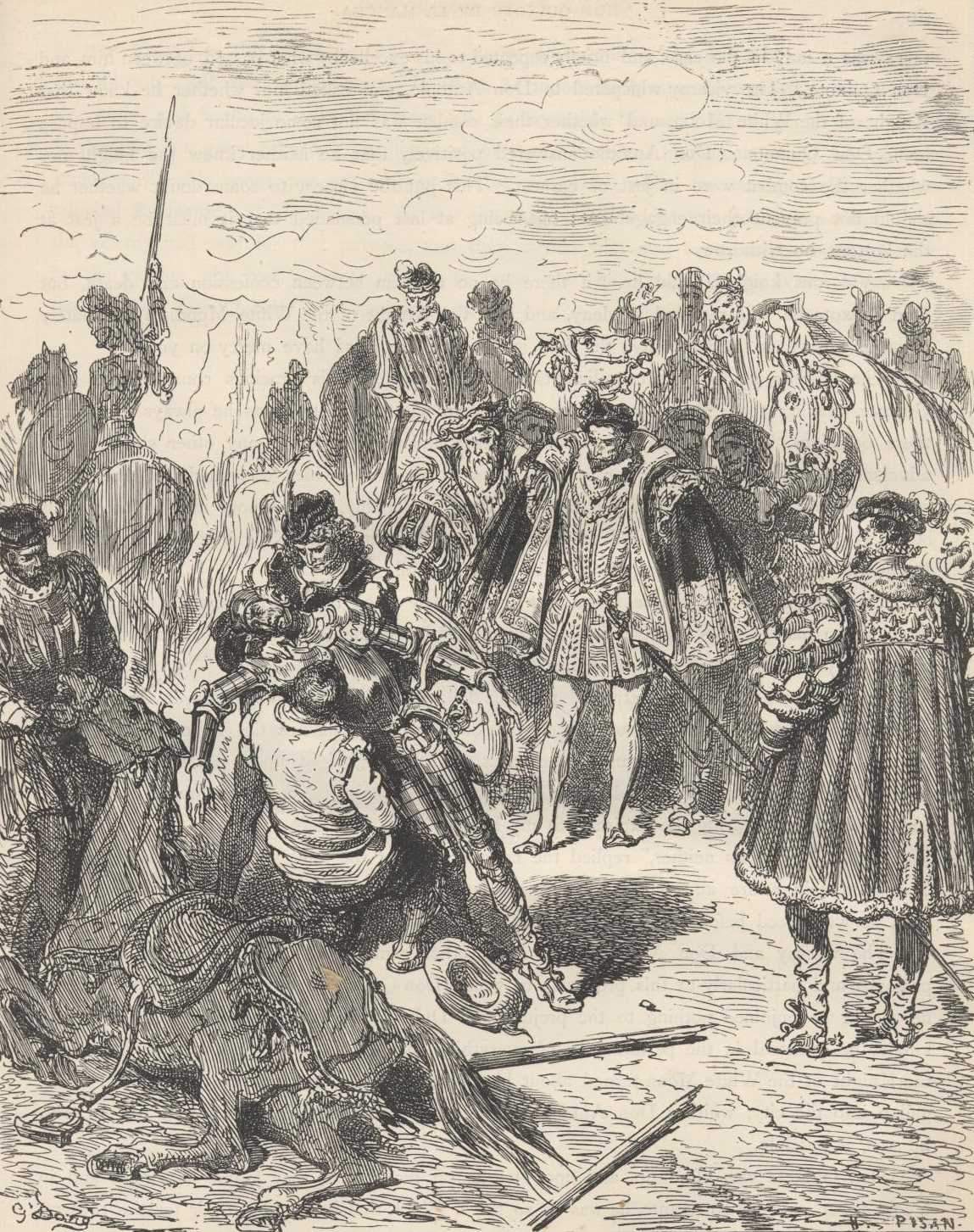
The Knight of the White Moon unhorses don Quixote on the beach at Barcelona and demands that he confess the terms of the challenge. Don Quixote, flat on his back, refuses to give up the one thing that matters, and the winner does not ask for it. This unit is about address between knights, vos, tú and the third person, and about honour kept by a man who has lost everything else.
The passage, exactly as Cervantes wrote it
Miguel de Cervantes, Part Two, Chapter 64. Unadapted.
Vencido sois, caballero, y aun muerto, si no confesáis las condiciones de nuestro desafío. Don Quijote, molido y aturdido, sin alzarse la visera, como si hablara dentro de una tumba, con voz debilitada y enferma, dijo: — Dulcinea del Toboso es la más hermosa mujer del mundo, y yo el más desdichado caballero de la tierra, y no es bien que mi flaqueza defraude esta verdad. Aprieta, caballero, la lanza, y quítame la vida, pues me has quitado la honra. — Eso no haré yo, por cierto —dijo el de la Blanca Luna—: viva, viva en su entereza la fama de la hermosura de la señora Dulcinea del Toboso, que sólo me contento con que el gran don Quijote se retire a su lugar un año, o hasta el tiempo que por mí le fuere mandado, como concertamos antes de entrar en esta batalla.
You are beaten, knight, and dead as well, if you do not confess the conditions of our challenge. Don Quixote, battered and stunned, without raising his visor, as if he were speaking from inside a tomb, said in a weak and sickly voice: Dulcinea del Toboso is the most beautiful woman in the world, and I the most unfortunate knight on earth, and it is not right that my weakness should rob this truth. Press on your lance, knight, and take my life, since you have taken my honour. That I will certainly not do, said the Knight of the White Moon. Let the fame of the beauty of the lady Dulcinea del Toboso live, live on whole, for I am content only that the great don Quixote should go home to his village for a year, or for as long as I may order him, as we agreed before we joined this battle.
The same thing in Spanish as it is written today
Read the two side by side. What has changed between them is the syllabus of this level.
Estáis vencido, caballero, y hasta muerto, si no confesáis las condiciones de nuestro desafío. Don Quijote, molido y aturdido, sin levantarse la visera, como si hablara desde dentro de una tumba, dijo con voz débil y enferma: Dulcinea del Toboso es la mujer más hermosa del mundo, y yo el caballero más desdichado de la tierra, y no está bien que mi debilidad perjudique a esta verdad. Aprieta, caballero, la lanza, y quítame la vida, ya que me has quitado la honra. Eso no lo haré yo, desde luego, dijo el de la Blanca Luna: que viva, que viva entera la fama de la hermosura de la señora Dulcinea del Toboso, que me conformo solo con que el gran don Quijote se retire a su pueblo un año, o hasta cuando yo le mande, como acordamos antes de empezar esta batalla.
What changed, form by form
| In the text | Today | Why it matters |
|---|---|---|
| Vencido sois | estáis vencido | Ser with a participle for the result of an action, where today estar is used. And vos between equals. |
| y aun muerto | y hasta muerto | Aun meaning even. The threat is a formula. |
| molido | molido | Ground, like grain. Still what Spaniards say after a hard day: estoy molido. |
| sin alzarse la visera | sin levantarse la visera | The dative se for a part of one's own body or clothing. |
| defraude esta verdad | perjudique a esta verdad | Defraudar in its old sense of taking something away from, without the modern sense of disappointing. |
| Aprieta, caballero, la lanza | aprieta la lanza | Don Quixote switches from vos to tú for this line, the address of a man asking to be killed. |
| pues me has quitado | ya que me has quitado | Pues for since, giving the cause. |
| por cierto | desde luego | Por cierto meaning certainly. Today it means by the way. |
| viva, viva en su entereza | que viva entera | The subjunctive of wishing, doubled, without que. |
| el de la Blanca Luna | el Caballero de la Blanca Luna | El de plus a name, the title reduced to its emblem. |
| le fuere mandado | le mande | Future subjunctive in the passive. |
The syntax
The winner speaks first, with vos, vencido sois, and the conditional threat of a formal challenge. Don Quixote's answer is two short statements of fact joined by y, then a moral judgement, no es bien que, then two tú imperatives, aprieta, quítame, and a reason with pues. The Knight of the White Moon replies about him in the third person, el gran don Quijote, which is how one speaks of someone with respect, and with a doubled subjunctive of wishing, viva, viva.
What a Spanish reader hears
The Knight of the White Moon is Sansón Carrasco in disguise, the student who has come to take don Quixote home by the only method his madness will accept, defeat in combat. He has won, and he could make don Quixote deny Dulcinea, and he does not. Don Quixote, for his part, would rather die than say she is not the most beautiful woman in the world, even with the lance at his face. It is the moment the book has been heading for, and it is a victory for both men: Sansón gets his neighbour home, and don Quixote keeps the only thing that was ever really his.
Where the course prepares you for this
- Resignation: what you say when nothing can be doneLesson 87Defeat on the beach