C1 · Part Two, Chapter 17
¿Leoncitos a mí? The adventure of the lions
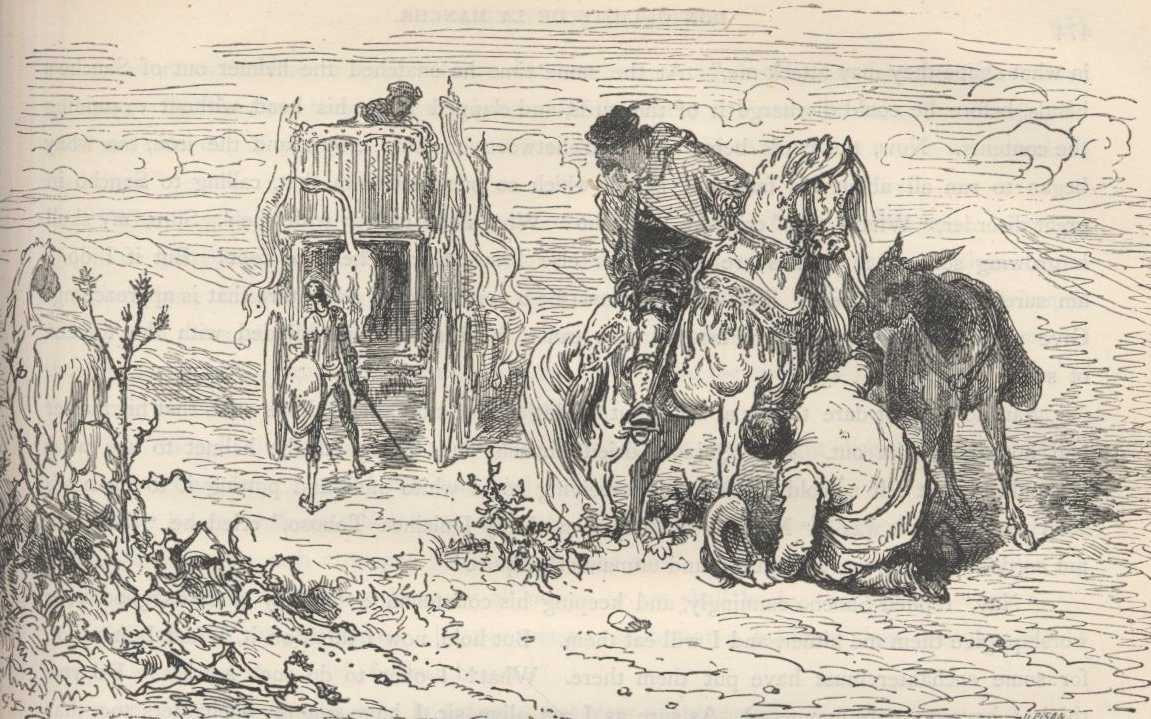
A cart carrying two lions to the king comes down the road, and don Quixote orders the keeper to open the cages. His reaction to the news is one of the best known lines of the second part, and it is built on a diminutive. This unit is about what -ito can do in Spanish besides make things small.
The passage, exactly as Cervantes wrote it
Miguel de Cervantes, Part Two, Chapter 17. Unadapted.
¿Leoncitos a mí? ¿A mí leoncitos, y a tales horas? Pues, ¡por Dios que han de ver esos señores que acá los envían si soy yo hombre que se espanta de leones! Apeaos, buen hombre, y, pues sois el leonero, abrid esas jaulas y echadme esas bestias fuera, que en mitad desta campaña les daré a conocer quién es don Quijote de la Mancha, a despecho y pesar de los encantadores que a mí los envían.
Little lions at me? At me, little lions, and at this time of day? Well, by God, those gentlemen who send them here shall see whether I am a man to be frightened of lions! Get down, good man, and since you are the lion keeper, open those cages and let those beasts out at me, for in the middle of this field I will let them know who don Quixote de la Mancha is, in spite and despite of the enchanters who send them to me.
The same thing in Spanish as it is written today
Read the two side by side. What has changed between them is the syllabus of this level.
¿Leoncitos a mí? ¿A mí leoncitos, y a estas horas? ¡Pues, por Dios, que van a ver esos señores que los mandan si soy yo hombre que se asusta de los leones! Bájese, buen hombre, y ya que es el leonero, abra esas jaulas y sáqueme esas fieras, que en medio de este campo les voy a enseñar quién es don Quijote de la Mancha, a pesar de los encantadores que me los envían.
What changed, form by form
| In the text | Today | Why it matters |
|---|---|---|
| Leoncitos | leoncitos | A diminutive of contempt. These are fully grown lions, and -ito turns them into toys. |
| ¿A mí leoncitos? | lo mismo hoy | The fronted a mí with no verb is still how Spaniards bristle: ¿a mí me dices eso? |
| a tales horas | a estas horas | At such an hour. Said of something that comes too late to be taken seriously. |
| han de ver | van a ver | Haber de for the future, with a note of threat. |
| Apeaos | bájese | A vos imperative with the pronoun attached. The d of apead drops before os. |
| sois el leonero | es el leonero | Vos to the keeper, a man of lower rank. |
| echadme esas bestias fuera | sáqueme esas fieras | A dative of interest. Let them out at me, for my benefit. |
| campaña | campo | Campaña in its old sense of open country. Today it means a campaign. |
| a despecho y pesar de | a pesar de | A doubled formula. Only the second half survives. |
The syntax
The whole speech hangs on the fronted a mí. Spanish can put the indirect object at the head of a sentence with no verb at all, ¿A mí leoncitos?, and the effect is indignation, then as now. Don Quixote says it twice, in both orders, which is exactly what an angry speaker does. After that the syntax calms down into commands, apeaos, abrid, echadme, each with its vos ending and its pronoun attached.
What a Spanish reader hears
This is the one adventure in the book in which the danger is real. The lions are real lions, the cage is really opened, and don Quixote really stands in front of it with his sword drawn. The lion looks at him, yawns, turns round and lies down again. Afterwards he changes his title from the Knight of the Sorrowful Face to the Knight of the Lions, and the gentleman in the green coat who watched it all cannot decide whether he has seen a madman or a hero. Neither can the reader, and that is exactly what Cervantes wants.
Where the course prepares you for this
- The whole of B1 in one sceneLesson 66The adventure of the lions