C2 · Part One, Chapter 30
Princess Micomicona forgets her own name
To get don Quixote home, the priest and the barber persuade Dorotea to play an African princess in distress. She improvises well, until she forgets the name they gave her, and the priest has to prompt her in the language of chivalry. This unit is about a performance inside a novel, and about the high style used as a cover.
The passage, exactly as Cervantes wrote it
Miguel de Cervantes, Part One, Chapter 30. Unadapted.
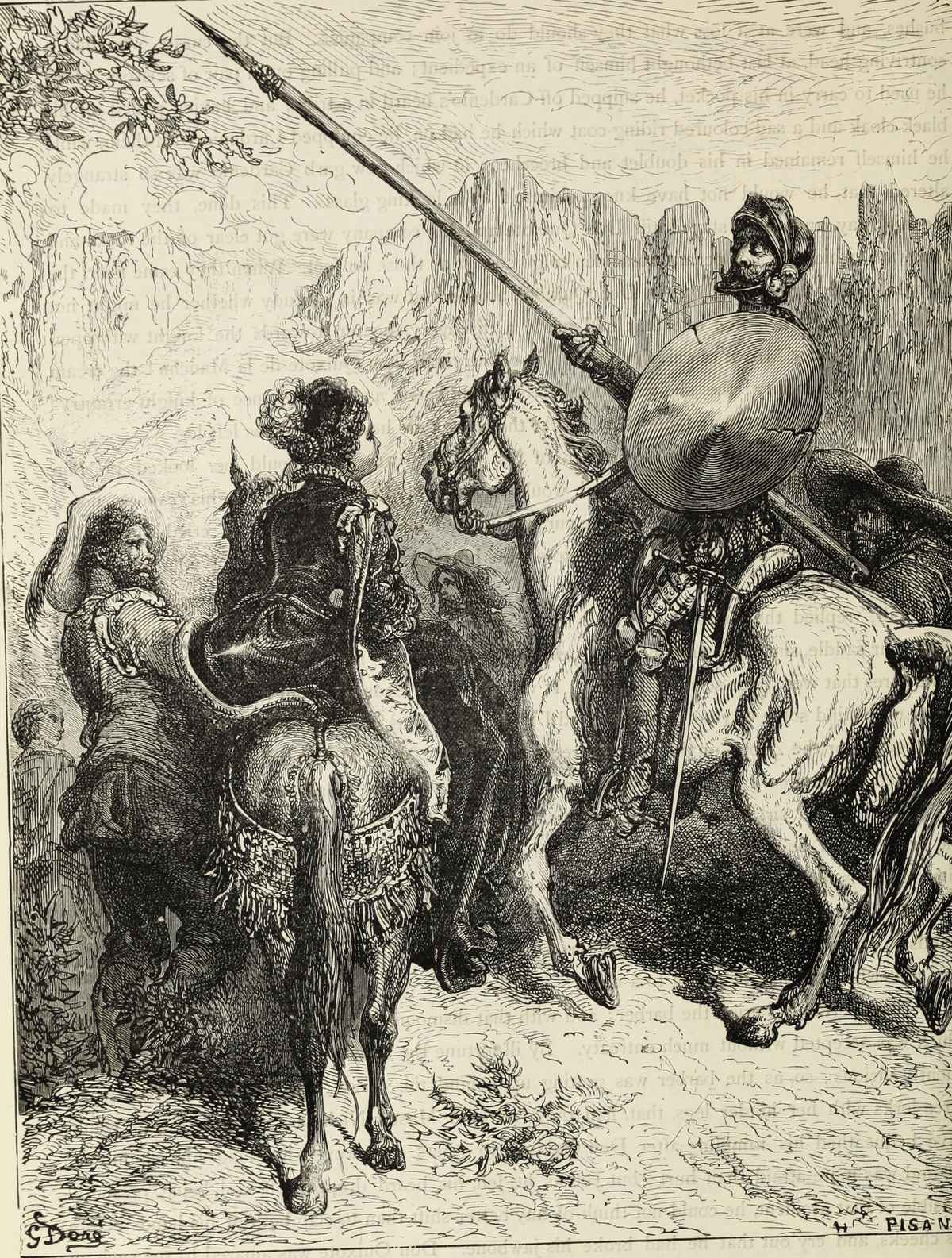
Primeramente, quiero que vuestras mercedes sepan, señores míos, que a mí me llaman...» Y detúvose aquí un poco, porque se le olvidó el nombre que el cura le había puesto; pero él acudió al remedio, porque entendió en lo que reparaba, y dijo: — No es maravilla, señora mía, que la vuestra grandeza se turbe y empache contando sus desventuras, que ellas suelen ser tales, que muchas veces quitan la memoria a los que maltratan, de tal manera que aun de sus mesmos nombres no se les acuerda, como han hecho con vuestra gran señoría, que se ha olvidado que se llama la princesa Micomicona, legítima heredera del gran reino Micomicón; y con este apuntamiento puede la vuestra grandeza reducir ahora fácilmente a su lastimada memoria todo aquello que contar quisiere. — Así es la verdad —respondió la doncella—, y desde aquí adelante creo que no será menester apuntarme nada, que yo saldré a buen puerto con mi verdadera historia.
First of all, I want your worships to know, my lords, that I am called... And here she stopped for a moment, because she had forgotten the name the priest had given her. But he came to the rescue, because he understood what she was stuck on, and said: It is no wonder, my lady, that your highness should be troubled and tongue tied in telling of your misfortunes, for they are often such that they rob those they ill treat of their memory, so that they cannot even remember their own names, as they have done with your great ladyship, who has forgotten that she is called the princess Micomicona, lawful heiress of the great kingdom of Micomicón. And with this prompt your highness can now easily bring back to your grieving memory all that you may wish to tell. That is the truth, replied the damsel, and from here on I think there will be no need to prompt me, for I shall bring my true story safely into port.
The same thing in Spanish as it is written today
Read the two side by side. What has changed between them is the syllabus of this level.
En primer lugar, quiero que sepan, señores, que a mí me llaman... Y aquí se detuvo un poco, porque se le olvidó el nombre que el cura le había puesto, pero él acudió a arreglarlo, porque entendió dónde se había atascado, y dijo: No es de extrañar, señora mía, que vuestra grandeza se turbe y se trabe al contar sus desgracias, que suelen ser tales que muchas veces quitan la memoria a quienes maltratan, de modo que ni siquiera se acuerdan de sus propios nombres, como le ha pasado a vuestra gran señoría, que se ha olvidado de que se llama la princesa Micomicona, legítima heredera del gran reino de Micomicón. Y con esta ayuda vuestra grandeza puede ahora devolver fácilmente a su dolorida memoria todo lo que quiera contar. Así es, respondió la doncella, y de aquí en adelante creo que no hará falta soplarme nada, que yo llegaré a buen puerto con mi verdadera historia.
What changed, form by form
| In the text | Today | Why it matters |
|---|---|---|
| detúvose | se detuvo | Enclitic pronoun after y at the start of a clause. |
| en lo que reparaba | dónde se había atascado | Reparar en algo, to notice something or to stop at it. Here, to be stuck on it. |
| No es maravilla | no es de extrañar | Maravilla meaning something to wonder at. No es de maravillar is still possible. |
| la vuestra grandeza | vuestra grandeza | An article in front of the title and its possessive, a courtly mannerism already antique. |
| se turbe y empache | se turbe y se trabe | Empacharse, to be tongue tied or embarrassed. Today it means to have indigestion. |
| aun de sus mesmos nombres no se les acuerda | ni siquiera se acuerdan de sus propios nombres | Acordársele a uno, remembering as something that happens to you, with the person in the dative. And mesmo for mismo. |
| apuntamiento | ayuda, pie | A prompt. Apuntar is still what the prompter does in a theatre. |
| reducir a su lastimada memoria | traer a su dolorida memoria | Reducir in its Latin sense of leading back. |
| que contar quisiere | que quiera contar | Future subjunctive, with the object in front of the verb. |
| saldré a buen puerto | llegaré a buen puerto | Still said: llegar a buen puerto, to see something through. |
The syntax
Watch the priest improvise. He turns Dorotea's slip into a courtly compliment, with vuestra grandeza and vuestra gran señoría, then a general truth about misfortune in the plural, and then slips the missing name into the middle of a long relative clause: que se ha olvidado que se llama la princesa Micomicona. The prompt is hidden inside the syntax, so that only she hears it as a prompt. Apuntamiento is the theatre word for it, and Dorotea picks the word up at once: no será menester apuntarme nada.
What a Spanish reader hears
This is a play inside the novel, performed for an audience of one madman, and it is going wrong in public. Dorotea is a real noblewoman with a real story of seduction and betrayal, and she is playing a fake princess with a fake story, and she forgets her lines. The priest covers for her in the same high style don Quixote uses, and Sancho, listening, believes every word. The joke is in her last phrase, mi verdadera historia, which she says about the fiction she is about to invent.
Where the course prepares you for this
- The present subjunctive: the form, and wantingLesson 43The princess Micomicona