C1 · Part One, Chapter 25
Basin or helmet: what looks like one thing to you
Sancho has been carrying the barber's basin around in a sack and plans to shave in it. Don Quixote explains, patiently, why it only looks like a basin. The explanation is the most quoted statement of the book's great theme, and grammatically it is a lesson in parecer.
The passage, exactly as Cervantes wrote it
Miguel de Cervantes, Part One, Chapter 25. Unadapted.
¿Que es posible que en cuanto ha que andas conmigo no has echado de ver que todas las cosas de los caballeros andantes parecen quimeras, necedades y desatinos, y que son todas hechas al revés? Y no porque sea ello ansí, sino porque andan entre nosotros siempre una caterva de encantadores que todas nuestras cosas mudan y truecan y les vuelven según su gusto, y según tienen la gana de favorecernos o destruirnos; y así, eso que a ti te parece bacía de barbero, me parece a mí el yelmo de Mambrino, y a otro le parecerá otra cosa.
Is it possible that in all the time you have been with me you have not noticed that everything to do with knights errant looks like fantasy, folly and nonsense, and that it is all done back to front? And not because it really is so, but because there is always a crowd of enchanters among us who change and swap all our things and turn them as they please, according to whether they feel like favouring us or destroying us. And so what looks to you like a barber's basin looks to me like the helmet of Mambrino, and to someone else it will look like something else.
The same thing in Spanish as it is written today
Read the two side by side. What has changed between them is the syllabus of this level.
¿Es posible que en todo el tiempo que llevas conmigo no te hayas dado cuenta de que todas las cosas de los caballeros andantes parecen fantasías, tonterías y disparates, y que están todas hechas al revés? Y no porque sea así de verdad, sino porque entre nosotros siempre anda una multitud de encantadores que cambian y trastocan todas nuestras cosas y las transforman a su gusto, según quieran favorecernos o destruirnos. Y así, eso que a ti te parece una bacía de barbero a mí me parece el yelmo de Mambrino, y a otro le parecerá otra cosa.
What changed, form by form
| In the text | Today | Why it matters |
|---|---|---|
| ¿Que es posible que | ¿es posible que | Que in front of a question, marking surprise. Still common in speech. |
| en cuanto ha que andas conmigo | en todo el tiempo que llevas conmigo | Haber for elapsed time again, and andar con alguien for keeping someone company. |
| no has echado de ver | no te has dado cuenta | Echar de ver, to notice, still in use. And the indicative after es posible que, where today the subjunctive is expected. |
| quimeras | fantasías | A chimera, a monster made of parts. Still used for an impossible dream. |
| sea ello ansí | sea así | Ello as a neutral subject, and ansí for así. |
| andan ... una caterva | anda una multitud | A plural verb with a collective noun, agreeing with the sense rather than the form. |
| mudan y truecan | cambian y trastocan | Two verbs of changing, for weight. Trocar survives in trueque, barter. |
| les vuelven | las transforman | Les as a direct object for things, pointing back to cosas. |
| eso que a ti te parece ... me parece a mí | lo mismo hoy | Parecer with the person in the dative, doubled with a ti te and a mí. The whole argument is in that verb. |
The syntax
The argument is carried entirely by parecer, and by the way Spanish doubles the person who does the seeing: a ti te parece, me parece a mí, a otro le parecerá. The object itself never becomes the subject of ser. Don Quixote does not say the basin is a helmet. He says it seems a basin to you and a helmet to me, then adds a third person in the future, and that grammatical choice is his whole defence.
What a Spanish reader hears
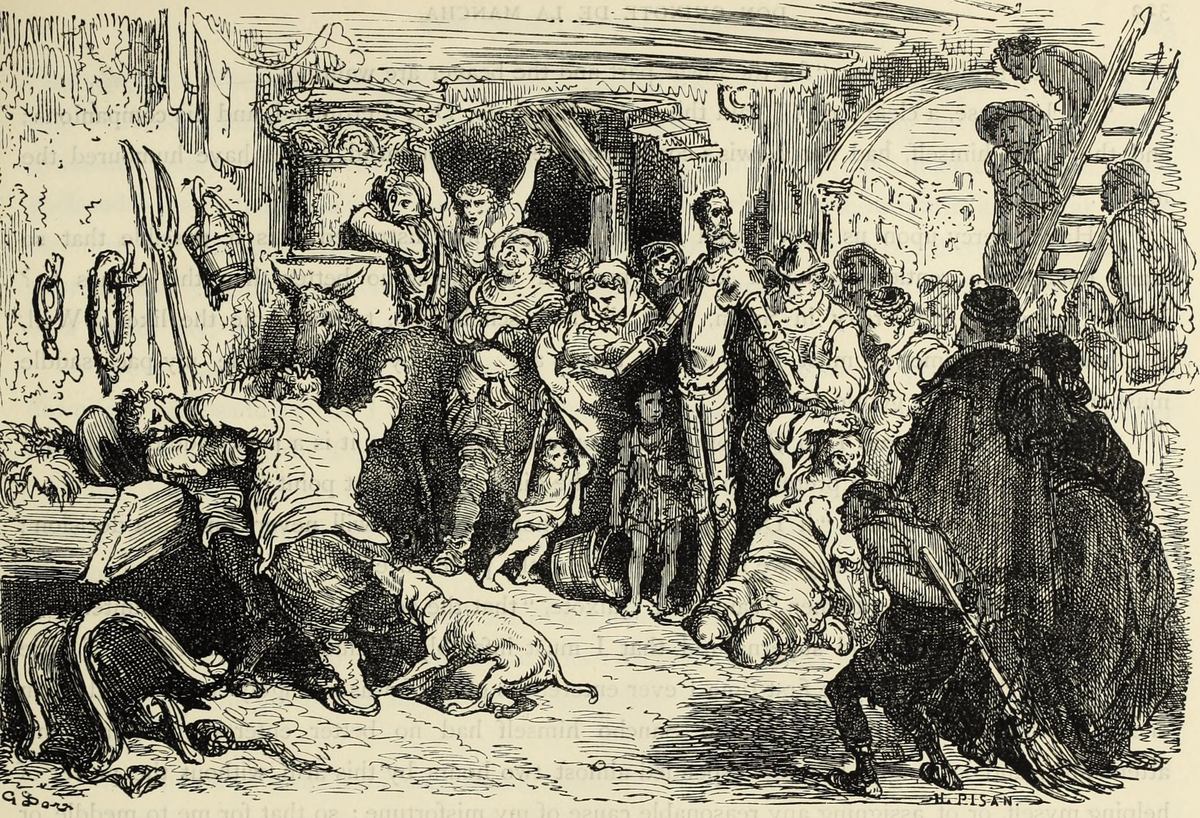
Readers have seen the whole modern novel in this line: one object, three observers, three truths. Don Quixote means something much simpler, that enchanters are disguising his helmet to protect it from envious eyes, and he goes on to say so. But the sentence runs ahead of his explanation. Twenty chapters later, at the inn, a whole crowd of characters will vote on whether it is a basin or a helmet, and Sancho will settle the matter with a word of his own invention, baciyelmo.
Where the course prepares you for this
- Por and paraLesson 36Mambrino’s helmet